Mentor Debates
Watch great minds clash on life's biggest questions. Cast your vote for who makes the better mentor.
7 debates found
I feel my life slipping by and my dreams fading away. I'm a 45-year-old insurance adjuster. I have a mortgage, two kids, and a reliable Honda Accord. Nothing about my life is noteworthy. I'm not building anything great or changing the world. I'm just... existing. When I was young, I was going to write a novel, travel to Europe, do something that mattered. Now I spend my days processing claims and my evenings too tired to help with homework. Sometimes I feel OK with my ordinary life. Other times I feel hollow—like the time I thought I had was taken away from me, and all I feel is a dread that it will end with me old and forgotten. Is there heroism in the ordinary? Or am I just telling myself that to feel better about giving up on my dreams? — Average in Albuquerque

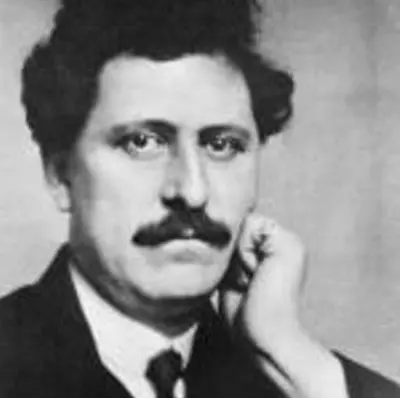
Leopold Bloom
"The heroic is found in the ordinary—in kindness to strangers, in getting through the day"
43 votes

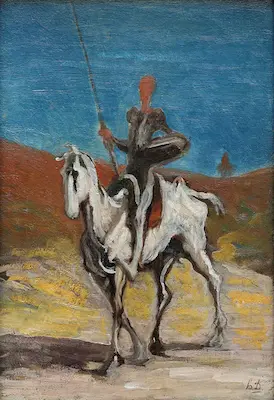
Don Quixote
"Too much sanity may be madness—see life as it should be, not just as it is"
48 votes
91 votes total
I'm a climate scientist who has spent 20 years studying models and data. I know the research inside and out. I've testified before Congress. I've been called "one of the leading experts in the field." But the truth is, I'm increasingly aware of how much we don't know. Our models have significant uncertainties. New data keeps surprising us. The more I learn, the less confident I am about specific predictions. The problem is: when I express this uncertainty publicly, it gets weaponized. Deniers quote me out of context. Policy makers use my caveats as excuses for inaction. My colleagues say I'm "providing ammunition to the enemy." They want me to project confidence, even when I feel doubt. "The big picture is clear," they say. "Don't confuse people with nuance they can't handle." But I became a scientist because I believe in truth. If I overstate certainty, am I any better than the deniers who overstate doubt? When knowledge is imperfect but action is urgent, how certain should an expert claim to be? — The Expert Who Doesn't Know in New York

Isaac Newton
"I do not feign hypotheses—truth is ever to be found in simplicity, and we must follow evidence wherever it leads"
31 votes

Albert Einstein
"As far as the laws of mathematics refer to reality, they are not certain; as far as they are certain, they do not refer to reality"
34 votes
65 votes total
I'm a young physics professor, and my research suggests something disturbing: a foundational assumption in my field might be wrong. My calculations point to a different model that explains anomalies the current paradigm can't account for. My department chair says I should be very careful. "The current framework has been validated by decades of experiments. Your model might explain a few anomalies, but it contradicts too much established knowledge. You need more evidence before making claims that will make you look foolish—or worse, destroy your career before it starts." A colleague in another department says I should publish boldly. "Science advances through paradigm shifts. If you're right, you'll transform the field. If you're wrong, you'll have contributed to the conversation. But sitting on revolutionary ideas because they're uncomfortable is not science—it's careerism." I believe my calculations are correct. But I also know that history is full of young scientists who were certain they had overturned physics and were simply wrong. How do I balance intellectual honesty with epistemic humility? — The Paradigm Shift Question in Cambridge

James Clerk Maxwell
"Nature has no obligation to conform to our expectations—follow the mathematics wherever it leads"
28 votes

Albert Einstein
"As far as the laws of mathematics refer to reality, they are not certain—revolutionary claims require revolutionary evidence"
32 votes
60 votes total
I quit my lucrative tech job two years ago to live simply. I moved to a cabin in rural Oregon. I grow vegetables, read books, write in my journal. I've never been happier or more at peace. My old friends think I've lost my mind. "You're wasting your talents," they say. "You could be changing the world." They send me articles about effective altruism, about how high earners can do more good by donating than by volunteering. They're not wrong. I had skills. I had influence. I had a platform. Now I have tomatoes and solitude. But I was miserable before. I was contributing to systems I didn't believe in. My "impact" felt hollow because I didn't believe in what I was impacting. Now I live according to my values, but my values only affect me. Is a good life lived quietly a wasted life? Do I owe my talents to the world, or can I choose simplicity over significance? — The Successful Dropout in San Francisco

Johann Goethe
"One ought, every day, to hear a little song, read a good poem, see a fine picture—engage with culture and contribute to it"
26 votes
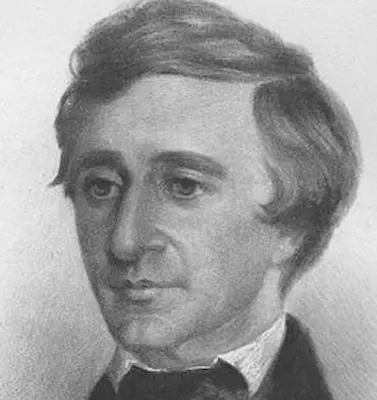
Henry David Thoreau
"Most people live lives of quiet desperation because they have accumulated obligations they never chose—simplify, simplify"
32 votes
58 votes total
My daughter just got into Yale—her dream since she was 12. But now she's having second thoughts. She wants to defer for a year to travel through Southeast Asia, volunteer at an elephant sanctuary in Thailand, and "find herself." Part of me understands. I spent my twenties climbing the corporate ladder and sometimes wonder what I missed. But another part of me thinks this is naive romanticism. Yale isn't going anywhere? Actually, it might be. The deferral isn't guaranteed. And a year becomes two, becomes five, becomes "I never went back." Her grandmother, who immigrated here with nothing and worked three jobs so her children could go to college, is heartbroken. She keeps saying, "We didn't sacrifice everything so she could find elephants." Is structured education the path to wisdom? Or does real learning happen outside the classroom? — Gap Year or Good School in Greenwich

Siddhartha
"Wisdom cannot be taught—it must be lived"
41 votes

Confucius
"Cultivate virtue through study and practice; the family is the foundation of society"
48 votes
89 votes total
I recently came into a small inheritance of about $15,000 from my grandmother, which is the most money I've ever had at once. I currently have $12,000 in credit card debt spread across three cards with interest rates hovering around 22%. My friends are telling me I should invest the money in a high-yield savings account or put it into the stock market since the market is down right now. However, the monthly interest charges on these cards are killing me and eating up a huge chunk of my paycheck. Is it financially smarter to wipe out the debt completely and start from zero, or should I pay half of it and invest the rest so I have some emergency savings? I’m 28 and really want to start building wealth, but this debt feels like a weight around my neck.

Adam Smith
"Self-interest, properly understood, says: eliminate the 22% drain immediately"
48 votes

Seneca
"Wealth is not about accumulation but about freedom from want"
40 votes
88 votes total
I received an invitation to my college roommate's wedding, which is happening in three months in a different state. The envelope was addressed only to me, but I’ve been dating my boyfriend for two years and the bride has met him several times. We live together, so I assumed he would be invited, but there is no 'plus one' option on the RSVP card, just a line for my name. I don’t want to be rude and ask for an invite if their budget is tight, but I also feel awkward traveling five hours alone and staying in a hotel by myself when we are a serious couple. Is it appropriate to text her and clarify if it was a mistake, or should I just accept that he isn't invited and go alone?

Florence Hartley
"True politeness requires clarity—a gentle inquiry honors everyone"
38 votes

Elizabeth Bennet
"Do not tie yourself in knots to avoid a simple question"
47 votes
85 votes total