Mentor Debates
Watch great minds clash on life's biggest questions. Cast your vote for who makes the better mentor.
7 debates found
I feel like my brain is dying. I used to be curious about everything—I read widely, took up new hobbies, asked questions constantly. Now I come home from my work as an accountant, scroll my phone for three hours, and go to bed. Last week my 8-year-old asked me why the sky is blue and I said "Google it" because I was too tired to think. Then I felt ashamed. When did I become this person? I want to recapture the sense of wonder I had as a kid. I want to learn things for the joy of learning, not for career advancement. But every time I try to start a new book or hobby, I give up after a few days because it feels pointless. How do I rekindle curiosity when adult life has crushed it out of me? — Intellectually Dead in Indianapolis

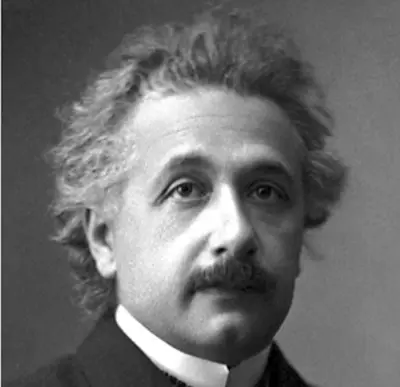
Albert Einstein
"Imagination is more important than knowledge—and it begins with play"
50 votes

Leonardo da Vinci
"Study the science of art and the art of science—learn how to see"
46 votes
96 votes total
I've been rejected by every literary magazine and agent I've submitted to. My MFA workshop loved my work, but the "real world" doesn't seem to care. I've started building a small community of other struggling writers—we meet weekly, share work, encourage each other. Some of my friends say I'm wasting my time with "losers who will never make it" instead of networking with successful people. But these are my people. We understand each other. We push each other. I feel more creative after our meetings than after any "networking event." Is my little community valuable, or am I hiding from rejection by surrounding myself with other rejects? How do I balance building genuine creative community with the practical need to connect with gatekeepers? — Salon of the Unsuccessful in Sacramento

Gertrude Stein
"Create the conditions for creation—surround yourself with those who push you"
47 votes
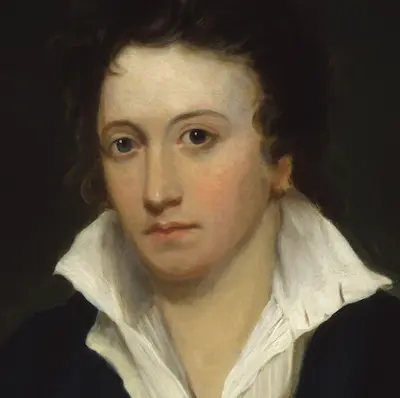
Percy Bysshe Shelley
"Poets are the unacknowledged legislators of the world—dream of better and make it real"
49 votes
96 votes total
For three years I've been working on a software project that I believe could change how people learn languages. I've shown it to investors twice—both times they said it was "interesting but not ready." My savings are running out. My girlfriend thinks I should get a "real job" and work on this nights and weekends. My parents keep asking when I'm going to "settle down." Even my co-founder quietly took a full-time job last month. The thing is, I KNOW this works. I've tested it with 200 users and the results are remarkable. But I can't seem to communicate the vision in a way that makes others see it. Do I keep pushing, or is everyone right that I'm being delusional? How do I know the difference between visionary persistence and stubborn foolishness? — Unseen in San Francisco

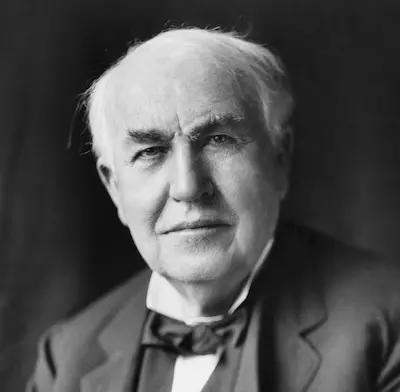
Thomas Edison
"Genius is 1% inspiration and 99% perspiration—keep iterating until something works"
40 votes

Nikola Tesla
"The present is theirs; the future, for which I really worked, is mine"
42 votes
82 votes total
My daughter is 11 and extraordinarily musically gifted. She started piano at 4 and was playing Chopin by 8. Her teacher says she has "once in a generation" talent. The question is how to develop it. Her current teacher emphasizes technique, theory, and systematic mastery. Hours of scales, careful analysis of structure, slow and methodical progression through increasingly difficult repertoire. "Genius is built, not born," she says. "The foundation must be unshakeable." But we consulted another teacher, who watched my daughter play and was horrified. "You're crushing her natural musicality with all this technique. She needs to play, to experiment, to find her own voice. The joy must come first—technique can follow." He pointed to recordings of young prodigies who played with freedom and emotion despite imperfect technique. My daughter doesn't complain about the rigorous approach, but I've noticed she rarely plays for fun anymore. Music has become work. Is that the price of excellence, or are we destroying the very thing that made her special? — The Prodigy's Parent in Brooklyn

J. S. Bach
"True freedom in music comes only from complete mastery of its structure—the rules are the foundation, not the cage"
30 votes
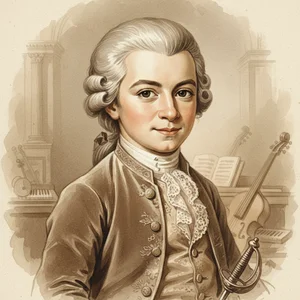
Mozart
"Music must first be felt—technique serves expression, not the other way around"
35 votes
65 votes total
I founded a startup three years ago with a brilliant technical innovation. We raised $10 million, built a team of 30, and launched a product that reviewers loved. We're almost out of money. Our technology is still better than competitors, but our operations are a mess. Customer support is slow, billing is error-prone, deliveries are late. We're losing customers who love our product but hate the experience of being our customer. My CTO says we need to double down on R&D—our tech advantage is eroding, and the only way to survive is to stay ahead of competitors technically. "Operations can be fixed later. If we lose our innovation edge, we have nothing." My COO says the opposite: "The best product in the world doesn't matter if customers can't rely on us. We need to pause development, fix our operations, and build a company that can actually deliver what we promise." I don't have resources to do both well. The next six months will determine if we survive. Do I bet on innovation or operations? — The Struggling Startup in Austin

E.H. Harriman
"The secret is not to acquire cheap properties but to make them valuable—operations create durable advantage"
31 votes

Thomas Edison
"Genius is one percent inspiration and ninety-nine percent perspiration—but without inspiration, you have nothing to perspire over"
33 votes
64 votes total
My 14-year-old daughter is gifted. IQ tests off the charts. She learned to read at 3, was doing algebra at 8, won a national writing competition at 11. Everything came easily. Now nothing comes at all. She's failing classes she could ace without trying. She quits every activity as soon as it gets hard. She says she's "not interested" in anything, but I think she's terrified of struggling. Her therapist says she has a "fixed mindset"—she's internalized that she's supposed to be effortlessly good, so any difficulty means she's failing. We need to teach her that effort is how people grow. But my husband—himself a successful musician—disagrees. "You can't force passion," he says. "If she's not interested, pushing her will just create resentment. Let her find her own path." I'm watching her waste potential. But I also remember being pushed as a child and hating it. Do gifted kids need extra pushing or extra space? Is talent wasted if it's not developed, or does forcing it destroy the joy? — The Talented Kid Who Stopped Trying in Minneapolis

Mozart
"Neither a lofty degree of intelligence nor imagination—one must feel the music inside; the capacity to create beauty cannot be forced"
35 votes

Thomas Edison
"Genius is one percent inspiration and ninety-nine percent perspiration—success comes from trying thousands of approaches until one works"
28 votes
63 votes total
I'm a filmmaker who's spent ten years making small, intimate character studies that get into festivals and win some awards but never break through. My films are quiet—about ordinary people, slow pacing, ambiguous endings. Critics call them "exquisite" and "restrained." Almost nobody sees them. Now a streaming platform is offering me $5 million to direct an action thriller. It's not my style. The script is bombastic, the emotions are broad, the ending is spelled out in neon. But it would reach 50 million viewers. And the producer says if it works, I can make whatever I want next. My mentor says I should stay true to my voice—that compromising will corrupt my artistic vision permanently. My agent says I'm being precious—that real artists adapt and evolve. I think about directors who "sold out" and never came back. But I also think about dying unknown while my hard drives full of unseen masterpieces gather dust. Is art that reaches millions but compromises vision still art? Or is purity of expression more important than audience? — Go Big or Stay True in Seattle

Richard Wagner
"Art must be revolutionary—the artist who merely entertains has failed; true art transforms souls"
43 votes

Jane Austen
"Work within constraints to achieve perfection—the power is in what you do not say"
40 votes
83 votes total