Mentor Debates

Watch great minds clash on life's biggest questions. Cast your vote for who makes the better mentor.

Filtered by:â™” Leadership & ManagementClear

9 debates found

Leadership & Management

My department is split over AI. I lead a department of 40 at a Fortune 500 company. The department is split down the middle: half believe we should aggressively adopt AI tools to stay competitive, half believe AI threatens their jobs and resist every initiative. The resisters aren't stupid—many are my most experienced people. They've seen "transformative" technologies come and go. But the adopters aren't wrong either—our competitors are moving fast and we're falling behind. I've tried compromise, pilot programs, training sessions. Nothing works. Both sides think I'm favoring the other. Morale is tanking. My best people on both sides are interviewing elsewhere. How do I lead when my team is genuinely, irreconcilably divided? Do I pick a side or keep trying to find middle ground? — Torn in Two in Toronto

Portrait of Abraham Lincoln

Abraham Lincoln

"Hold firm to what matters most, but remain flexible on how you achieve it"

50 votes

Portrait of Cleopatra VII

Cleopatra VII

"Indecision is a decision to fail—choose and commit before the choice is made for you"

41 votes

91 votes total

Leadership & Management

My department's been dysfunctional for years, and I've just been promoted to lead it. The previous manager blamed the problems on the team. The team blames the previous manager. HR blames both. Everyone has a different story, and I don't know who to believe (or trust). I've been told to "fix the culture," but I'm not sure culture is the problem. It could be the systems are broken—unclear processes, contradictory incentives, no accountability mechanisms. When I suggested structural changes, people say I'm "not addressing the real issue" which is "trust". Do I focus on fixing the people and relationships, or do I redesign the systems and processes? Can you even have good culture without good systems? Or good systems without good culture? — Engineer Trying to Fix Humans in Hartford

Portrait of James Watt

James Watt

"Improvement comes from careful refinement of what exists—study the problem before solving it"

49 votes

Portrait of James Madison

James Madison

"Good systems account for human weakness, not just human virtue"

41 votes

90 votes total

Home & Life Management

I'm a working mom of three who feels like I'm failing at everything. My house is always messy. Dinner is often cereal or takeout. I forgot my son's school picture day. I missed a deadline at work because I was at a pediatrician appointment. My mother-in-law has opinions about all of this. She raised four kids, kept an immaculate house, and always had dinner on the table at 6pm. When I say times are different now, she says "standards are standards." I know I can't do everything, but I feel like I'm not doing anything well. Should I lower my standards and accept "good enough," or should I get more organized and disciplined so I can actually achieve excellence in at least some areas? — Drowning in the Domestic in Dallas

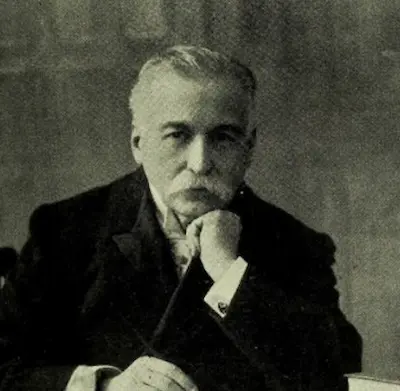
Portrait of Auguste Escoffier

Auguste Escoffier

"Good cooking is the foundation of genuine happiness—but simplicity is the keynote of elegance"

36 votes

Portrait of Mrs. F.L. Gillette

Mrs. F.L. Gillette

"A well-ordered household is the foundation of a happy life—but order serves the family, not the reverse"

45 votes

81 votes total

Leadership & Crisis

The startup I founded just lost its primary funding source. We have four months of runway. My team of 12 took massive pay cuts to join me. Some have turned down other offers. They believe in the mission. I've been telling them we'll find new funding, but honestly, I'm not sure we will. The market has changed. VCs are skeptical. Every door I knock on closes. Part of me wants to admit the truth—that we might not make it—so they can start looking for other jobs. Part of me believes that if I do that, the team will fall apart and we'll definitely fail. How do I lead when I don't know if we'll survive? Do I protect my team from the truth or trust them with it? — Captain of a Sinking Ship in San Diego

Portrait of Sir Ernest Shackleton

Sir Ernest Shackleton

"Difficulties are just things to overcome—but your team deserves to know the stakes"

43 votes

Portrait of Columbus

Columbus

"You can never cross the ocean unless you have the courage to lose sight of the shore"

37 votes

80 votes total

Leadership & Power

I'm the founder and CEO of a company I started 12 years ago. We grew from my garage to 340 employees and $50M in revenue. Last year, our board brought in a "President" to handle day-to-day operations so I could focus on "vision." In practice, I've been sidelined. The President makes decisions I disagree with. He's restructured teams I built. Employees who used to come to me now go to him. The board says the company "needs professional management" and hints that founder-CEOs often struggle to scale. Part of me knows they might be right. But another part of me is furious. This is MY company. I built it. I know it better than anyone. The President's "professional" approach is stripping away the culture that made us special. Should I fight to reclaim control, accept a reduced role gracefully, or walk away entirely? Is this ego, or legitimate concern? — Dethroned in Denver

Portrait of George Washington

George Washington

"True leadership means knowing when to step aside—your legacy is not the throne"

43 votes

Portrait of Napoleon Bonaparte

Napoleon Bonaparte

"Never surrender what you've built to those who lack your vision"

35 votes

78 votes total

Leadership & Uncertainty

I feel like I'm driving off a cliff. I'm leading my company's expansion into a new market. No one at our company has done this before. The board approved the project based on my proposal, but honestly, I was guessing at a lot of the numbers. Now I have a team of 8 people who relocated for this opportunity. They trust me. But every week brings a new problem I didn't anticipate. Costs are higher than projected. The regulatory environment is more complex. Our timeline is slipping. I'm torn between admitting uncertainty (which might undermine confidence) and projecting confidence (which might be lying). My team needs to believe this will work, but I'm not sure it will. How do I lead into the unknown without either deceiving my team or paralyzing them with my own doubts? — Navigator Without a Map in Nashville

Portrait of Ferdinand Magellan

Ferdinand Magellan

"The sea is dangerous, but obstacles have never been sufficient reason to remain ashore"

36 votes

Portrait of James Cook

James Cook

"Ambition must be tempered by meticulous care for those who follow you"

40 votes

76 votes total

Leadership & Power

I just became CEO after a brutal boardroom battle. I won, but barely—the vote was 5-4, and the four who opposed me haven't resigned. They're still on the board, still whispering to executives, still trying to undermine every initiative I propose. My instinct is to clean house. Push them out, promote loyalists, make it clear that opposition has consequences. A friend who runs a private equity firm says, "Consolidate power fast or they'll do it to you." But my wife, who's watched me through years of corporate warfare, says I'm becoming someone she doesn't recognize. "What happened to the guy who wanted to build something, not just win?" she asked last night. I could try to win them over. Make concessions. Build a team of rivals. But that feels naive—they've already shown they'd rather see me fail than the company succeed. Is there wisdom in magnanimity, or is that just a recipe for getting stabbed in the back? — The Divided Company in Charlotte

Portrait of Otto von Bismarck

Otto von Bismarck

"Consolidate power when you have advantage—mercy to enemies is cruelty to yourself"

39 votes

Portrait of Abraham Lincoln

Abraham Lincoln

"Even your enemies deserve empathy—you may need them as allies tomorrow"

48 votes

87 votes total

Leadership & Influence

I'm the new CEO of a regional hospital system that desperately needs reform. Quality scores are dropping, staff morale is terrible, and three of our five board members are blocking every change I propose. They're old-guard, connected to donors, and more interested in their own legacy than patient outcomes. I have two paths: I can try to win them over through patience, relationship-building, and demonstrating results. My COO calls this "leading by example" and thinks it's the only sustainable approach. Or I can use the leverage I have—I know about some questionable contracts they've approved, and the major donor who recruited me has offered to help push them out if I give the word. The gentle path could take years we don't have. The hard path could work but might make enemies who torpedo us later. How do you create change when the people in power won't be moved by reason or example? — The Resistant Board in Baltimore

Portrait of St. Francis of Assisi

St. Francis of Assisi

"Preach always; use words only when necessary—transform through example, not force"

40 votes

Portrait of Otto von Bismarck

Otto von Bismarck

"Great questions are decided not by speeches but by iron and blood—and shrewd timing"

45 votes

85 votes total

Leadership & Strategy

I've spent 15 years building a nonprofit that provides legal aid to immigrants facing deportation. We've helped thousands of families. But the political climate has changed. Funding has dried up. Half my staff left for better-paying jobs. Our win rate in court has dropped from 60% to 20% as laws tightened. My board says it's time to "pivot"—focus on less controversial work that can attract donors. A colleague suggested merging with a larger organization where I'd lose control but we'd survive. Another says I should close with dignity rather than watch us slowly die. Part of me wants to fight until the last dollar is gone. These families need someone in their corner. But another part wonders if I'm being stubborn rather than strategic. Maybe my energy is better spent elsewhere. When is it wisdom to keep fighting, and when is it wisdom to let go? — Fighting for a Lost Cause in Phoenix

Portrait of Krishna

Krishna

"Surrender attachment to outcomes—act from duty, not desire for victory"

36 votes

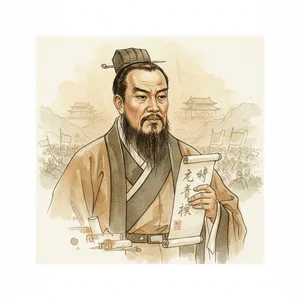
Portrait of Sun Tzu

Sun Tzu

"The supreme art is to subdue the enemy without fighting—know when to engage and when to withdraw"

35 votes

71 votes total