Mentor Debates
Watch great minds clash on life's biggest questions. Cast your vote for who makes the better mentor.
13 debates found
Ten years ago, I embezzled $40,000 from the small nonprofit where I worked. I was young, stupid, in debt from a gambling addiction. I got caught, served eight months, and lost everything. Since then, I've rebuilt my life completely. I'm sober, married, have two kids, and work in a completely different field. Nobody in my current life knows about my past. I've paid back every cent through anonymous donations to the nonprofit. Now I've been nominated for a community leadership award. The ceremony involves a background check. If I decline, people will wonder why. If I accept, my past might come out. If I come forward first, I control the narrative—but my kids would learn who I used to be. Do I owe people the truth about my past? Have I earned the right to a new identity? Or is hiding always a form of lying? — Reformed But Still Running in Richmond

Jean Valjean
"The past does not define you—your choices today do"
49 votes

Sherlock Holmes
"When you eliminate the impossible, whatever remains must be the truth"
50 votes
99 votes total
I have a dilemma that's causing me stress. I'm the principal at a small, private high school in Milwaukee. One of my students posted something on social media outside of school hours that other students found offensive—a meme that mocked a classmate's religion. The mocked student's parents want the poster expelled. The poster's parents say it's free speech and the school has no jurisdiction over what happens off-campus. I'm stuck. I believe in free expression. I also believe schools should be safe for everyone. The posting student isn't a bully—he's a good kid who made a thoughtless joke. The offended student is genuinely hurt and now afraid to come to school. Where does free speech end and harm begin? How do I teach accountability without crushing a 16-year-old for one mistake? — Caught in the Middle in Milwaukee

Unknown
"The only freedom deserving the name is pursuing our own good without harming others"
45 votes

Confucius
"Cultivate virtue in yourself before seeking to change others"
49 votes
94 votes total
My boss regularly takes credit for his employees' work. He did it to me twice—presenting my analysis to the board as his own. When I mentioned it to HR, they said "that's just how Steve is" and reminded me he's "well-connected." My friends say I should just accept it—pick my battles, focus on what I can control, don't make waves. My husband says I should document everything and file a formal complaint, even if it costs me my job. I'm torn. Part of me wants to be stoic about it and just do good work. Another part of me feels like staying silent makes me complicit in a system that exploits people. Do I accept what I cannot change, or do I fight even if I'll probably lose? — Stolen From in Seattle

Marcus Aurelius
"You have power over your mind, not outside events—focus on what is within your control"
39 votes
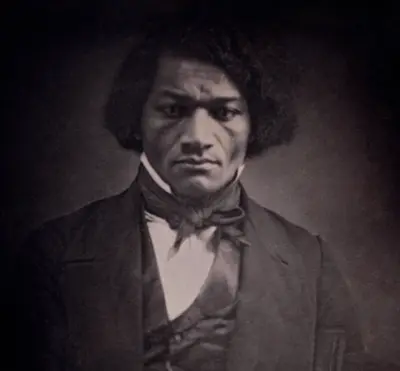
Frederick Douglass
"Power concedes nothing without a demand—your silence enables the system"
48 votes
87 votes total
Should I take "dirty" money? I work at a nonprofit fighting housing discrimination. We recently had a chance to partner with a large corporation that would fund our work for three years. The corporation has a reputation of being discriminatory, and, particularly, discriminatory against our community. Their CEO has made dismissive comments about our community in the past. Half my team says we should take the money and use it to help people who need it now. The other half says partnering with them legitimizes their image while they continue to practice discrimination. I'm the executive director and have to decide. The money would let us serve 500 more families. But I'd have to stand next to that CEO at a press conference and smile. When fighting for justice, how do you decide when to compromise and when to stand firm? Is it selling out if the money genuinely helps people? — Conflicted in Cleveland

Sojourner Truth
"Truth is powerful and it prevails—do not let their money buy your silence"
36 votes

Susan B. Anthony
"Failure is impossible—if we persist, strategize, and build coalitions"
50 votes
86 votes total
I own a small manufacturing company with 45 employees. Business is tough right now—margins are razor thin and a competitor just undercut our prices by 15%. They can do it because they pay minimum wage and offer no benefits. I pay above market and offer health insurance. My employees have been with me for years. But I'm bleeding money. My accountant says I need to cut wages or lay off 10 people to survive. My competitor's owner sleeps fine at night. I believe treating workers well is the right thing to do—and I thought it was also good business. But now I'm not sure I can afford my values. Do I compromise my principles to survive, or hold firm and potentially go under? — Nice Guys Finishing Last in Louisville

G. Westinghouse
"Business success and ethical behavior are compatible—but require innovation"
47 votes

Adam Smith
"Self-interest, properly channeled, serves the common good—but markets require moral foundations"
36 votes
83 votes total
I inherited an apartment building from my grandmother. She kept rents low for decades—many tenants have been there 20+ years, paying far below market rate. Some are elderly on fixed incomes. Some are families who've built their lives around this affordable housing. I can't afford to do what she did. Property taxes have tripled. Maintenance costs are crushing me. I've been subsidizing the building from my own salary, but I have kids approaching college age and no retirement savings. If I raise rents to market rate, most of these people will have to leave. They can't afford anything else in this city. One woman told me she'd be homeless. My financial advisor says I'm being foolish—"You're not a charity. These people would have had to move eventually anyway. You didn't create the housing crisis." He's right that I didn't create it. But I'm being asked to enforce it. My grandmother sacrificed her own financial security for these tenants. Was that noble or naive? Am I obligated to continue her sacrifice, or is it fair to finally pursue my own interests? — The Landlord's Dilemma in Los Angeles

Charles Dickens
"No one is useless in this world who lightens the burdens of another—we are bound to those who depend on us"
33 votes

Adam Smith
"Self-interest, properly channeled, serves the common good—but even markets require moral foundations"
28 votes
61 votes total
I work at a federal agency and I've discovered that my department has been systematically falsifying safety inspection data for a major industry. People have died because of this. I have documents proving everything. The legal route is a dead end—I've tried. The inspector general is compromised. Congressional oversight is gridlocked. The industry has too many lobbyists. A journalist has offered to publish everything if I leak the documents. It would be illegal. I'd likely go to prison. But it might save lives. My lawyer says there's another way: I could use what I know as leverage. Quietly approach the agency head, make clear what I have, negotiate reforms in exchange for my silence. "That's how Washington actually works," she says. "You get results without martyrdom." The leverage play feels dirty—I'd be using the same transactional logic that created this corruption. But the leak might accomplish nothing except destroying my life. When the system is broken, do you work within its rules or break them? Is it better to be effective or to be pure? — The Whistleblower's Dilemma in Washington

Niccolò Machiavelli
"A prince must learn how not to be good, and use this knowledge according to necessity"
32 votes

Mahatma Gandhi
"The means are as important as the ends—impure means corrupt even worthy goals"
26 votes
58 votes total
I was a pastor for fifteen years. Last year, I had an affair. My wife found out, my congregation found out, and I lost everything—my marriage, my ministry, my reputation, my sense of who I am. I've repented. I believe I've been forgiven by God. But I don't know what to do with the rest of my life. Some people tell me that grace means I can start fresh—God's forgiveness is complete, and I shouldn't let my past define me. They point to other fallen pastors who've rebuilt ministries. "Grace covers all," they say. Others say that consequences are real, that discipline matters, that some doors close permanently when you violate trust. "Forgiveness doesn't mean restoration to leadership," they say. "Maybe your calling now is to serve quietly, to prove your repentance through years of faithful obscurity." I believe in grace. But I also know I broke something sacred. Do I trust that God can restore what I destroyed, or do I accept that some failures permanently change what's possible? — The Fallen Pastor in Nashville

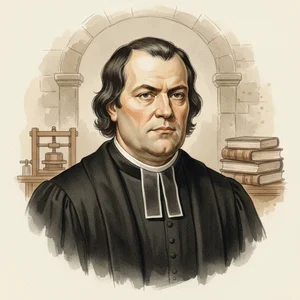
Martin Luther
"Grace alone saves—you cannot earn forgiveness, and you cannot un-earn it through sufficient penance"
31 votes

John Calvin
"Forgiveness does not erase consequences—true repentance accepts the discipline that sanctifies"
26 votes
57 votes total
I work at a major tech company. I have evidence that our AI product is being used by a foreign government to identify and track dissidents. People have disappeared after being flagged by our system. I've raised concerns internally. I was told the use is "within the terms of service" and that we "can't control how customers use our products." That's technically true and morally bankrupt. I've decided to act, but I'm torn about how. One option is to go public loudly—leak documents to journalists, name names, burn bridges, and accept the consequences. Maximum pressure, maximum visibility, probably maximum retaliation. Another option is quieter resistance—secretly documenting everything, connecting with other concerned employees, building a coalition for change from within, working with sympathetic board members. Less dramatic, but maybe more sustainable and less destructive. My partner says the loud approach is ego—that I want to be a martyr more than I want to create change. But the quiet approach feels like complicity while people suffer. When fighting a powerful institution, do you confront or subvert? — The Tech Whistleblower in San Francisco

Martin Luther
"Here I stand, I can do no other—when conscience is captive to truth, bold action is required"
26 votes

Mahatma Gandhi
"The means are as important as the ends—sustainable change requires building power, not just exposing truth"
29 votes
55 votes total
I inherited $12 million when my father died last year. I didn't earn it. He built a manufacturing company that, frankly, wasn't always ethical in how it treated workers or the environment. Now I have this money and I don't know what to do with it. Part of me wants to give it all away—to the workers' families, to environmental causes, to just... not have it be mine anymore. It feels dirty. I feel like a fraud living in my modest apartment while millions sit in accounts. My financial advisor thinks I'm insane. "You can do more good over time with strategic philanthropy," he says. "Keep the principal, give the interest." My therapist says my guilt is misplaced—I'm not responsible for my father's choices. But every morning I wake up and think about St. Francis stripping naked in the town square, giving everything back to his merchant father. Is radical generosity wisdom or foolishness? Can you do good with money that was made badly? — Rich and Empty in Rye

St. Francis of Assisi
"In giving we receive—true joy comes not from possessions but from serving others"
46 votes

Adam Smith
"Wealth, properly channeled, serves the common good—keep the principal, grow your impact"
43 votes
89 votes total
My neighbor, "Brenda," has been using my flower beds as a shortcut for her daily power walks. She’s already trampled my award-winning petunias twice! When I politely asked her to stay on the sidewalk, she laughed and said I was being "too precious" about a little dirt. Now, she won't even wave back. Am I overreacting, or is she stepping out of line?

Sun Tzu
"Know your terrain and choose your battles wisely"
38 votes

Confucius
"Harmony in the neighborhood requires understanding, not victory"
48 votes
86 votes total
I'm an organizer fighting a development company that's displacing hundreds of low-income families in my neighborhood. They've bought off city council members, their lawyers are crushing us in court, and our peaceful marches get covered for one news cycle then forgotten. Some younger activists want to escalate. Block construction equipment. Occupy buildings. Make it too expensive and embarrassing for them to continue. "The system doesn't respond to niceness," they say. "It responds to power and disruption." The older members of our coalition are horrified. They marched with Dr. King. They believe nonviolent moral witness is the only legitimate path. They say if we break the law, we become the villains. But the families are being evicted *now*. Every month we spend on incremental progress, another building is demolished. At what point does commitment to peaceful means become complicity with the violence being done to us? — Peaceful Protest or Hardball in Portland

Mahatma Gandhi
"Nonviolent resistance is more powerful than violence—the means are as important as the ends"
37 votes

Otto von Bismarck
"Politics is the art of the possible—power concedes nothing to those who won't exercise it"
46 votes
83 votes total
I'm a nurse in a hospital that's cutting staff to boost profits. Patient care is suffering. I've documented safety violations, reported to supervisors, followed every proper channel. Nothing changes. Now I have to choose: Do I go to the media and become a whistleblower, probably ending my career and possibly facing legal retaliation? Or do I accept that I've done what I can within the system and focus on caring for the patients in front of me? My husband says I have a duty to fight. My mentor says I have a duty to my own family first. I have two kids and we need my income. When your duty to others conflicts with your duty to yourself and your family, how do you choose? Is there honor in accepting what you cannot change, or only in fighting regardless of cost? — Two Masters in Minneapolis

Krishna
"Do your duty without attachment to the fruits of action"
36 votes

Marcus Aurelius
"You have power over your mind, not outside events—focus only on what is within your control"
45 votes
81 votes total