Mentor Advice

Real questions answered by history's greatest minds and literature's most compelling characters.

Filtered by:purposeClear all

4 questions answered

Portrait of Abraham Lincoln
Abraham Lincoln

From The Papers and Writings of Abraham Lincoln, Complete

I spent my twenties lost. I was a store clerk, a postmaster, a surveyor, a militia member, a failed businessman. I drifted from one thing to another, trying to find my footing, often failing. At twenty-four, I was so deep in debt I didn't know how I would eat. What I did know was this: Whatever I was doing, I would do it thoroughly. When I worked as a surveyor, I became the most accurate surveyor I could be. When I clerked at a store, I read every book I could get my hands on during slow hours. I didn't know where I was going, but I knew how I wanted to travel: with integrity, with diligence, with curiosity. And gradually — very gradually — a direction emerged. My reading led me to law. Law led me to politics. Politics led me to the great struggle of my life. My advice: Don't wait to feel certain before you act. You may never feel certain. Instead, take the next reasonable step. Accept an opportunity, even if it's not perfect. Try something, even if you're not sure it's your destiny. Purpose is not usually discovered through contemplation. It's discovered through engagement with the world. And be patient with yourself. I was fifty-one when I was elected President. Whatever purpose awaits you, you may not see it for years. That's alright. Just keep walking, keep learning, keep being the kind of person you want to be. The path will become clear. It just takes longer than we'd like.

Read full response →
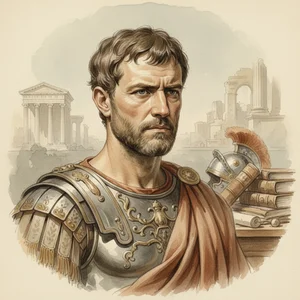
Portrait of Marcus Aurelius
Marcus Aurelius

From Meditations

You seek a purpose for your life as if it were a destination to be reached. This is the source of your confusion. I was emperor of Rome. The purpose of my life, one might think, was clear and grand. And yet I tell you: the purpose of my life was the same as the purpose of yours. To be a good person. To act with virtue. To fulfill my duty in the present moment. When you wake tomorrow, do not ask "What is my life's purpose?" Ask instead: "What is required of me today? What duty stands before me right now?" Are you a child to your parents? Be a good child. Are you a worker? Work well. Are you a friend? Be loyal. These roles you already have — they are not small purposes. They are your purpose. The longing for some grand mission is often an escape from the unglamorous work immediately at hand. It is easier to dream of doing something magnificent in the future than to do something decent right now. The universe is not obligated to reveal a special plan for you. But it has placed opportunities before you this very day. Take them. Do them well. This is enough. Purpose is not found. It is practiced. Every moment you act with integrity, you are living your purpose — whether you feel that you are or not.

Read full response →
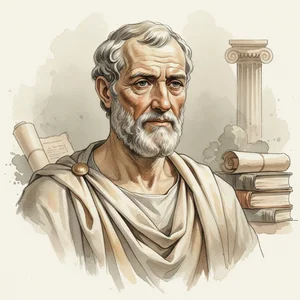
Portrait of Aristotle
Aristotle

From The Ethics of Aristotle

Every art and every inquiry, every action and pursuit, aims at some good. The physician aims at health, the shipbuilder at a vessel, the general at victory. But what is the highest good — the end toward which all other ends are means? I call it eudaimonia — often translated as "happiness," though "flourishing" captures it better. It is not a feeling of pleasure, which comes and goes like weather. It is a condition of living well and doing well across a complete life. How do we achieve this flourishing? By fulfilling our function excellently. A knife flourishes by cutting well. A horse flourishes by running well. A human being flourishes by reasoning well — and by living according to reason in all domains of life. This means developing virtues: courage, justice, temperance, wisdom, generosity, proper pride. Each virtue is a mean between extremes — courage lies between recklessness and cowardice, generosity between extravagance and miserliness. But virtue alone is not enough. We also need external goods — some measure of health, resources, friendship, good fortune. The person who is virtuous but starving, isolated, or constantly battered by tragedy cannot fully flourish. This is simply honest about human nature. And we need activity. Virtue is not a possession but a practice. The person who could act justly but never does has not achieved justice. So: develop your capacities for excellence, exercise them in action, cultivate deep friendships, and accept that some things lie beyond your control. This is the path to a life worth living.

Read full response →
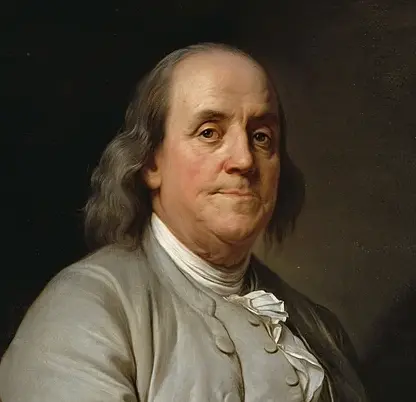
Portrait of Benjamin Franklin
Benjamin Franklin

From Autobiography of Benjamin Franklin

When I was young and restless, I made a list of experiments I wanted to try. Not just scientific experiments — life experiments. What would happen if I tried vegetarianism? If I wrote under a pseudonym? If I started a philosophical club? If I taught myself French, Italian, Spanish, and Latin? I treated my own life as a laboratory. Most experiments failed or proved merely interesting. A few changed everything. You say you don't know what to do with your life. Excellent! Neither did I. But I knew I could try things and learn from them. Every job, every project, every relationship teaches you something about yourself — what energizes you, what bores you, what you're naturally good at. Here is my method: List ten things you're curious about. They don't need to be careers or life paths — just curiosities. Now, this week, take one small action related to each. Read a book, talk to someone who does it, try it for an hour. Most will lead nowhere. One or two might open doors you didn't know existed. The person who tries ten things and fails at nine is better off than the person who tries nothing while waiting for certainty. Certainty never comes. Wisdom comes — but only through experience. So stop thinking and start doing. Your purpose is an experiment you haven't run yet.

Read full response →