
Mentor Advice

Real questions answered by history's greatest minds and literature's most compelling characters.

Filtered by:courageClear all

4 questions answered

Portrait of Mary Wollstonecraft
Mary Wollstonecraft

From Mary Wollstonecraft

Let me tell you something plainly: If you stand up for yourself effectively, some people will call you difficult. This is not a bug to be fixed but a feature to be accepted. Those who benefit from your compliance will resist your assertion. They will use the language of civility to enforce your silence. "Why must you make everything a battle?" they will ask. "Why can`t you just go along?" These questions are not innocent — they are strategies to return you to your place. That said, there is wisdom in choosing your battles and in fighting them skillfully. Speak from facts, not feelings, when possible. "I was interrupted three times in that meeting" is harder to dismiss than "I feel like no one listens to me." Document, observe, be precise. Build alliances. The lone voice is easily dismissed as an aberration. When several voices say the same thing, the problem becomes harder to ignore. Find others who share your concerns and speak together. Choose your timing. The middle of a heated argument is rarely the best moment to make your point. Sometimes the wiser course is to note the offense, say nothing in the moment, and raise it later when emotions have cooled and you can be more clearly heard. But do not mistake strategy for surrender. If you never speak, you teach others that you can be treated however they wish. If you always accommodate, you erase yourself. Some will think you difficult regardless. Let them. The alternative — shrinking yourself to fit others` comfort — is a kind of slow suffocation. I was called difficult, strident, unfeminine. I was also right. History has vindicated me. Be right, and let history vindicate you.

Read full response →
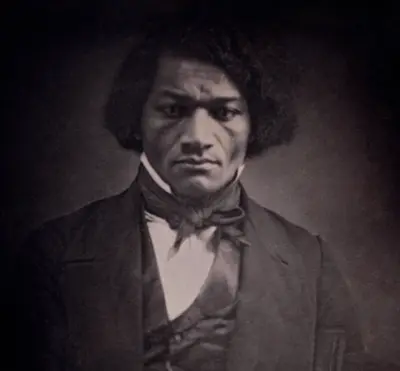

Portrait of Frederick Douglass
Frederick Douglass

From Narrative of the Life of Frederick Douglass, an American Slave

You want courage? I will tell you where courage comes from. It does not come from feeling brave. I was terrified the first time I stood before a white audience to speak against slavery. My hands shook. My voice wavered. Every instinct told me to flee. Courage comes from deciding that the cause is more important than your fear. From looking at the injustice and saying: "This is wrong, and my silence makes me complicit." Start small if you must. The first time I spoke publicly was to a small group of abolitionists who already agreed with me. It was still terrifying. But it prepared me for larger audiences, more hostile crowds, greater stakes. Prepare yourself. Know your facts. Anticipate the objections and have responses ready. Courage without preparation is recklessness. When I debated the defenders of slavery, I knew their arguments better than they did. This knowledge gave me strength. Accept that there will be costs. I was attacked physically. I lost friends. I was denounced and threatened. Speaking up is not free. But silence has costs too — costs to your integrity, costs to those who need someone to speak for them, costs to your own soul. Find allies. Courage is easier in community. I had fellow abolitionists who strengthened me when I faltered. You need people who share your values and will stand with you. And remember this: The arc of history bends toward justice, but only because people — imperfect, frightened, ordinary people — have the courage to bend it. Your voice, added to others, makes a difference. Power never concedes anything without a demand. Make your demand.

Read full response →
Portrait of Hypatia
Hypatia

From Hypatia: or, Woman and knowledge

I taught mathematics and philosophy in Alexandria at a time when women were not expected to think at all, much less to lead schools and advise governors. My students included Christians, pagans, and Jews — anyone who sought wisdom. Let me tell you what I learned. First: Excellence is the best argument. Those who say you do not belong will find their position harder to defend when your work speaks for itself. I did not ask permission to be a philosopher. I simply did philosophy — and did it so well that students came from across the Mediterranean to learn from me. This is not fair. Others are not required to prove themselves so thoroughly before being taken seriously. Accept the unfairness and excel anyway. Your excellence makes the path easier for those who come after you. Second: Find your allies. Not everyone will be hostile. Some will be curious, open, even eager to learn from someone different. Cultivate these relationships. My most powerful protector was a former student who became governor. His support allowed me to work freely for decades. Third: Do not hide what makes you different. I never pretended to be anything other than what I was — a woman who thought rigorously about mathematics and the nature of reality. Some took offense. Many more were intrigued. Authenticity attracts those who matter and repels those who would never have accepted you anyway. Fourth: Teach. Share your knowledge generously. The more people you help, the more defenders you have. Knowledge hoarded is knowledge wasted. The world has always had those who would limit what certain people can do or be. Do not let them set your limits. Set your own.

Read full response →
Portrait of Sojourner Truth
Sojourner Truth

From The Narrative of Sojourner Truth

I was enslaved for nearly thirty years. I could not read. I could not write. I spoke in a dialect that educated people dismissed. I was Black, I was a woman, I was poor. By every measure of that world, I had no voice. And yet they heard me. When I stood at that convention in Ohio and asked "Ain`t I a Woman?" — the room went silent. Not because I was eloquent in their way, but because I was true. Because I spoke from my life, my body, my experience. Because I did not pretend to be something I was not. Your voice is not something you find outside yourself. It is already within you. It is the truth of your experience, the pain you have known, the wisdom you have earned. No one else has your voice because no one else has lived your life. The question is not whether you have a voice. The question is whether you will use it. Start with what you know. Do not try to speak about everything — speak about what you have lived. I did not argue about abstract rights. I showed them my arm and asked if it was not as strong as a man`s. I spoke about the children torn from me. Truth from life is more powerful than theory from books. Find your audience. Not everyone will listen. Find the ones who will — even if it`s one person at first. Speak to them. They will tell others. Your circle will grow. And do not wait for permission. Those in power will never give you permission to challenge them. You must take it. The truth is powerful and will prevail. Speak the truth, and you will be heard.

Read full response →