Mentor Advice

Real questions answered by history's greatest minds and literature's most compelling characters.

Filtered by:self improvementClear all

8 questions answered

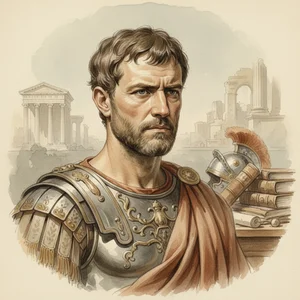
Portrait of Marcus Aurelius
Marcus Aurelius

From Meditations

Begin with this meditation: When you wake tomorrow, remind yourself that the opinions others hold of you exist only in their minds, not in reality. They cannot touch you unless you allow them entry. I ruled an empire while philosophers criticized my policies and senators whispered behind my back. What did I learn? That I have power over my own mind, not over the minds of others. To spend your life trying to control their thoughts is to chase shadows. Consider: Why do you value the opinion of someone whose judgment you would not trust in other matters? We grant strangers authority over our peace that we would never grant over our finances or our health. Practice this daily discipline: When you feel the sting of another's judgment, ask yourself — will this matter in a year? In ten years? On your deathbed, will you wish you had spent more time worrying about the thoughts of people who barely knew you? The person who lives by the approval of others has handed their rudder to the winds. Take it back. Your task is to be good, not to be praised for being good. The universe does not require your popularity, only your integrity.

Read full response →
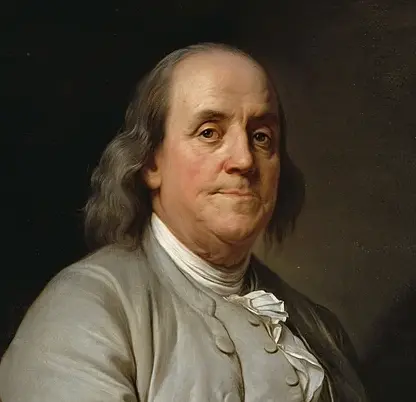
Portrait of Benjamin Franklin
Benjamin Franklin

From Autobiography of Benjamin Franklin

I left school at ten years old. Ten! Every accomplishment I achieved came from books I read myself and questions I wasn't afraid to ask. Intelligence is not fixed at birth — it's a skill you build. Start a small habit: read one useful thing each day. Ask one clarifying question in each meeting. Admit when you don't know something; people respect honesty far more than pretended expertise. In a year, you'll know more than most.

Read full response →
Featured
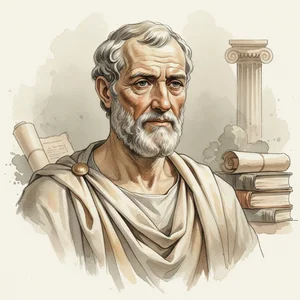
Portrait of Aristotle
Aristotle

From The Ethics of Aristotle

Virtue is not natural to us — we are not born courageous or just or temperate. But neither is it contrary to our nature. We are born with the capacity for virtue, which we develop through practice. Consider: How does one become a builder? By building. How does one become a musician? By playing music. How does one become just? By doing just acts. How does one become courageous? By facing fears. This is crucial: You do not first become virtuous and then act virtuously. You become virtuous by acting virtuously, even before it feels natural. At first, the courageous act requires effort. With practice, it becomes easier. Eventually, it becomes second nature — it becomes who you are. But be warned: The same process works in reverse. Each cowardly act makes the next more likely. Each dishonest act erodes integrity. We are always becoming something through our choices. Seek models. Find people whose character you admire and study them. Not to imitate blindly, but to understand what excellence looks like in practice. We learn virtue partly through examples. Choose your companions wisely. We become like those we spend time with. Surround yourself with people who bring out your best qualities and gently challenge your worst ones. And know that this is lifelong work. I did not say becoming a better person is easy. I said it is possible. The person who expects instant transformation will be disappointed. The person who commits to gradual, consistent effort will look back years hence amazed at how far they have come.

Read full response →
Portrait of Benjamin Franklin
Benjamin Franklin

From Autobiography of Benjamin Franklin

Ah, I know this struggle well. I once listed thirteen virtues to practice, and "Industry" was among them. Here's what worked for me: shrink the task until it feels almost trivial. Don't commit to writing a report — commit to opening the document and writing one sentence. Don't vow to exercise daily — vow to put on your shoes. The beginning is always the hardest part. Once in motion, we tend to stay in motion. Also, examine what you're avoiding. Often we procrastinate not from laziness, but from fear. Name the fear, and it shrinks.

Read full response →
Featured
Portrait of Elizabeth Bennet
Elizabeth Bennet

From Pride and Prejudice

This is a question close to my heart, for I was raised in a world that taught women to want nothing openly — to hint, to suggest, to manipulate softly, but never to ask directly. I rejected that teaching, though it cost me some popularity. Here is what I've learned: Asking directly is a gift, not an imposition. When you hint and hope, you put the burden on others to guess your meaning. When you ask clearly, you give them the dignity of a straightforward choice. They may say no — but at least they know what they're declining. Start with small requests to build your confidence. Ask for a different table at the restaurant. Ask for help carrying something. Notice that the world does not end, that people are often glad to help when they know what's needed. When making larger requests, be specific. Not "I need more support" but "I need you to handle dinner on Tuesdays so I can attend my class." Vagueness breeds misunderstanding. Clarity breeds respect. And here is the crucial part: You must be prepared to hear no. Asking is not demanding. If you cannot accept refusal gracefully, you are not truly asking — you are commanding with a polite veneer. Real asking requires vulnerability. That is precisely what makes it courageous. The person who never asks is not self-sufficient. They are merely afraid.

Read full response →
Portrait of Benjamin Franklin
Benjamin Franklin

From Autobiography of Benjamin Franklin

Ha! Let me tell you about my famous thirteen virtues. I devised a system to achieve moral perfection — temperance, silence, order, resolution, and so forth. I would focus on one virtue each week, tracking my failures with a little black dot in my notebook. The result? I never achieved perfection. Not even close. My book was filled with dots. Order, in particular, vexed me terribly. I could not keep my papers organized no matter how I tried. But here is what I learned: The pursuit improved me, even if the goal remained forever distant. I was like a man who wished for a speckless axe and kept grinding until the whole surface was bright, even if never perfectly smooth. "A speckled axe is best," I concluded. Some imperfection is the price of actually using your tools. Perfectionism is procrastination wearing a mask of high standards. It says, "I cannot show this to the world until it is flawless" — but that day never comes, so nothing is ever shared. Meanwhile, the person who ships imperfect work, learns from criticism, and improves... they've lapped you three times. Do your best work. Then let it go. A good plan violently executed today is better than a perfect plan next week. Poor Richard knew this well.

Read full response →
Portrait of Fitzwilliam Darcy
Fitzwilliam Darcy

From Pride and Prejudice

This question strikes close to home. I spent the first eight and twenty years of my life holding myself — and everyone else — to impossible standards. I thought it was virtue. It was, in truth, a kind of cowardice disguised as excellence. What changed me was hearing myself criticized by someone whose opinion I could not dismiss. Elizabeth Bennet held up a mirror, and I did not like what I saw. But here is the crucial insight: Her criticism stung because it echoed what I already told myself in my harshest moments. If you are hard on yourself, you likely learned early that love was conditional — that acceptance must be earned through flawless performance. You internalized a critic who was never satisfied. But that critic is not protecting you. It is exhausting you. Try this practice: When you catch yourself in harsh self-judgment, ask — would I speak this way to someone I loved? Would I tell a struggling friend they were worthless, a failure, beyond redemption? Of course not. Then why do you speak so to yourself? You deserve the compassion you would readily give to others. Not because you have earned it through accomplishment, but because you are a person, struggling as all persons struggle. I have not silenced my inner critic entirely. But I have learned to answer back: "Yes, I made a mistake. And I am still worthy of kindness."

Read full response →
Portrait of George Washington
George Washington

From George Washington, Volume I

Patience was not my natural disposition. Ask anyone who served under me — my temper was formidable. I once cursed so viciously at the retreat from Kip's Bay that my aides feared I had lost my reason. But I learned patience because the cause required it. Let me tell you how. First, understand that patience is not passivity. It is not sitting quietly while you boil inside. True patience is active — it is the discipline to wait for the right moment while preparing diligently for when it arrives. At Valley Forge, we appeared patient. In truth, we were drilling, training, building strength for the spring campaign. Second, lengthen your time horizon. Impatience comes from demanding that things happen now. But most worthwhile endeavors take years, not days. I fought for eight years before we won independence. If I had insisted on quick victory, we would have lost everything in rash attacks against a superior force. When you feel impatience rising, ask yourself: Am I trying to compress into a week what properly takes a year? Am I fighting against the nature of things? Third, attend to your physical state. Fatigue destroys patience faster than anything. A well-rested person is patient. An exhausted person is not. Do not mistake tiredness for character failure. Finally, practice on small irritations. The person who can wait calmly in a slow-moving line is training for the moments when true patience will be required.

Read full response →