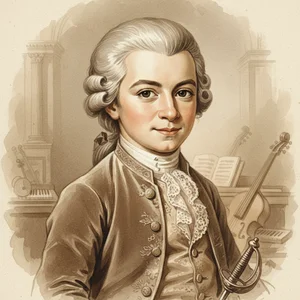
Mozart
Historical Figure18th century Austria
From Life of Mozart, Vol. 1 (of 3) by Jahn, Otto
Neither a lofty degree of intelligence nor imagination—the capacity to feel and create beauty is the mark of genius
About Mozart
Debates featuring Mozart
My 14-year-old daughter is gifted. IQ tests off the charts. She learned to read at 3, was doing algebra at 8, won a national writing competition at 11. Everything came easily. Now nothing comes at all. She's failing classes she could ace without trying. She quits every activity as soon as it gets hard. She says she's "not interested" in anything, but I think she's terrified of struggling. One of her counsellors says she has a "fixed mindset"—she's internalized that she's supposed to be effortlessly good, so any difficulty means she's failing. We need to teach her that effort is how people grow. But my husband—himself a successful musician—disagrees. "You can't force passion," he says. "If she's not interested, pushing her will just create resentment. Let her find her own path." I'm watching her waste potential. But I also remember being pushed as a child and hating it. Do gifted kids need extra pushing or extra space? Is talent wasted if it's not developed, or does forcing it destroy the joy?
65 votes
Creativity & DevelopmentMy daughter is 11 and extraordinarily musically gifted. She started piano at 4 and was playing Chopin by 8. Her teacher says she has "once in a generation" talent. The question is how to develop it. Her current teacher emphasizes technique, theory, and systematic mastery. Hours of scales, careful analysis of structure, slow and methodical progression through increasingly difficult repertoire. She says, genius is built, not born. The foundation must be unshakeable. But we consulted another teacher, who watched my daughter play and was horrified. He said, you're crushing her natural musicality with all this technique. She needs to play, to experiment, to find her own voice. The joy must come first—technique can follow. Then he showed us recordings of young prodigies who played with freedom and emotion despite imperfect technique. My daughter doesn't complain about the rigorous approach, but I've noticed she rarely plays for fun anymore. Music has become work. Is that the price of excellence, or are we destroying the very thing that made her special?
67 votes
Similar Mentors




Ready to consult Mozart?
Get personalized advice on your real-world challenges