My 14-year-old daughter is gifted. IQ tests off the charts. She learned to read at 3, was doing algebra at 8, won a national writing competition at 11. Everything came easily. Now nothing comes at all. She's failing classes she could ace without trying. She quits every activity as soon as it gets hard. She says she's "not interested" in anything, but I think she's terrified of struggling. Her therapist says she has a "fixed mindset"—she's internalized that she's supposed to be effortlessly good, so any difficulty means she's failing. We need to teach her that effort is how people grow. But my husband—himself a successful musician—disagrees. "You can't force passion," he says. "If she's not interested, pushing her will just create resentment. Let her find her own path." I'm watching her waste potential. But I also remember being pushed as a child and hating it. Do gifted kids need extra pushing or extra space? Is talent wasted if it's not developed, or does forcing it destroy the joy? — The Talented Kid Who Stopped Trying in Minneapolis
Do gifted children need more pushing or more freedom?
My 14-year-old daughter is gifted. IQ tests off the charts. She learned to read at 3, was doing algebra at 8, won a national writing competition at 11. Everything came easily. Now nothing comes at all. She's failing classes she could ace without trying. She quits every activity as soon as it gets hard. She says she's "not interested" in anything, but I think she's terrified of struggling. Her therapist says she has a "fixed mindset"—she's internalized that she's supposed to be effortlessly good, so any difficulty means she's failing. We need to teach her that effort is how people grow. But my husband—himself a successful musician—disagrees. "You can't force passion," he says. "If she's not interested, pushing her will just create resentment. Let her find her own path." I'm watching her waste potential. But I also remember being pushed as a child and hating it. Do gifted kids need extra pushing or extra space? Is talent wasted if it's not developed, or does forcing it destroy the joy? — The Talented Kid Who Stopped Trying in Minneapolis

Mozart
"Neither a lofty degree of intelligence nor imagination—one must feel the music inside; the capacity to create beauty cannot be forced"
35 votes
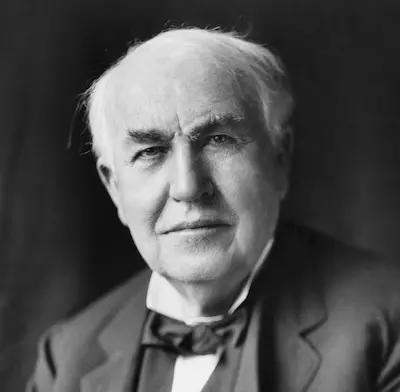
Thomas Edison
"Genius is one percent inspiration and ninety-nine percent perspiration—success comes from trying thousands of approaches until one works"
28 votes
63 votes total
Full Positions
From Life of Mozart, Vol. 1 (of 3)
"Neither a lofty degree of intelligence nor imagination—one must feel the music inside; the capacity to create beauty cannot be forced"
I know something of being the gifted child. I was composing at five, performing for royalty at six. Everything came easily—and yet I worked constantly, not because I was pushed but because the music demanded it. Your daughter has lost the demand. She no longer feels called by anything. Pushing her will not restore that call; it will only teach her to perform for external approval, which is exhausting and hollow. Your husband is right that passion cannot be forced. But he may be wrong that she must find her own path alone. What she needs is not pressure but exposure—to people doing meaningful work, to challenges that intrigue rather than threaten, to the experience of mastery that comes through struggle. She has forgotten what it feels like to want something. Help her remember.
From Historical Figures Collection
"Genius is one percent inspiration and ninety-nine percent perspiration—success comes from trying thousands of approaches until one works"
Your daughter has been given a gift and also a curse: she was praised for being effortless, and now effort feels like failure. But effortlessness is a lie. I failed thousands of times before each success. The difference between success and failure is not talent—it is persistence through difficulty. Her therapist is correct about the fixed mindset, but the solution is not psychological analysis—it is experience. She needs to try something hard and fail and try again and eventually succeed through effort. Not once, but repeatedly, until she learns that struggle is not shameful but necessary. Do not let her quit when things get hard. That teaches her that hardness is a reason to stop. It is not. It is where growth begins. Love her enough to let her struggle.