My daughter is 11 and extraordinarily musically gifted. She started piano at 4 and was playing Chopin by 8. Her teacher says she has "once in a generation" talent. The question is how to develop it. Her current teacher emphasizes technique, theory, and systematic mastery. Hours of scales, careful analysis of structure, slow and methodical progression through increasingly difficult repertoire. "Genius is built, not born," she says. "The foundation must be unshakeable." But we consulted another teacher, who watched my daughter play and was horrified. "You're crushing her natural musicality with all this technique. She needs to play, to experiment, to find her own voice. The joy must come first—technique can follow." He pointed to recordings of young prodigies who played with freedom and emotion despite imperfect technique. My daughter doesn't complain about the rigorous approach, but I've noticed she rarely plays for fun anymore. Music has become work. Is that the price of excellence, or are we destroying the very thing that made her special? — The Prodigy's Parent in Brooklyn
Is musical genius built through rigorous discipline or nurtured through creative freedom?
My daughter is 11 and extraordinarily musically gifted. She started piano at 4 and was playing Chopin by 8. Her teacher says she has "once in a generation" talent. The question is how to develop it. Her current teacher emphasizes technique, theory, and systematic mastery. Hours of scales, careful analysis of structure, slow and methodical progression through increasingly difficult repertoire. "Genius is built, not born," she says. "The foundation must be unshakeable." But we consulted another teacher, who watched my daughter play and was horrified. "You're crushing her natural musicality with all this technique. She needs to play, to experiment, to find her own voice. The joy must come first—technique can follow." He pointed to recordings of young prodigies who played with freedom and emotion despite imperfect technique. My daughter doesn't complain about the rigorous approach, but I've noticed she rarely plays for fun anymore. Music has become work. Is that the price of excellence, or are we destroying the very thing that made her special? — The Prodigy's Parent in Brooklyn

J. S. Bach
"True freedom in music comes only from complete mastery of its structure—the rules are the foundation, not the cage"
30 votes
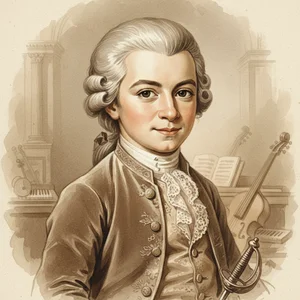
Mozart
"Music must first be felt—technique serves expression, not the other way around"
35 votes
65 votes total
Full Positions
From Johann Sebastian Bach: His Life, Art, and Work
"True freedom in music comes only from complete mastery of its structure—the rules are the foundation, not the cage"
The second teacher mistakes freedom for the absence of discipline. But freedom in music—true freedom, the ability to say exactly what you mean—comes only from complete command of the instrument and its language. I spent years copying the works of masters, analyzing their structures, drilling technique until it was unconscious. Only then could I compose freely, because only then did I have the vocabulary to express what was in my soul. Your daughter does not play for fun anymore? Good. She is learning that music is serious, that it demands everything. The joy will return—deeper and richer—when she masters her craft. The prodigies who play with "freedom and emotion despite imperfect technique" rarely mature into true artists. They exhaust their natural gifts and have nothing to fall back on. Build the foundation now. The cathedral comes later.
From Life of Mozart, Vol. 1 (of 3)
"Music must first be felt—technique serves expression, not the other way around"
My father trained me rigorously, yes. But he also knew that music is not mathematics—it is communication from one soul to another. Your daughter's current teacher is building a technician, not an artist. Scales and theory are necessary, but they are means, not ends. When the joy disappears, something essential has been lost. I composed my first pieces at five not because I had mastered theory but because the music was already inside me, demanding to be expressed. The technique came because I needed it to say what I wanted to say. Your daughter rarely plays for fun anymore? That is not the price of excellence—it is the sign that excellence is being trained out of her. She needs room to experiment, to make mistakes, to discover what she wants to say with music. Technique without soul produces skilled emptiness. Let her play.