“Be not overcome of evil, but overcome evil with good.”
“So farewell hope, and with hope farewell fear, Farewell remorse; all good to me is lost. Evil, be thou my good.”
Imagine a child bullied relentlessly. One voice urges forgiveness, turning the other cheek, "overcoming evil with good." Another whispers a darker promise: power through embracing the bully's tactics, finding strength in ruthlessness. We're caught between the pull of societal virtue and the seductive allure of transgression. Does true strength lie in adhering to an externally defined morality, or in confronting and integrating our own shadow? The debate centers on whether societal norms or personal exploration holds the key to individual fulfillment.
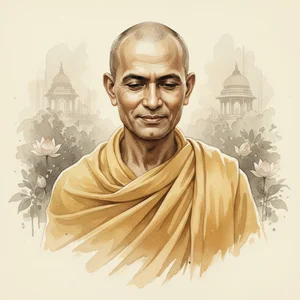
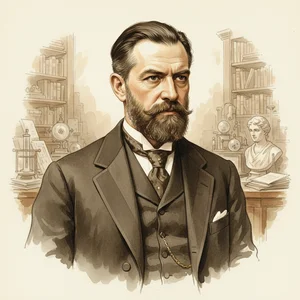
Siddhartha GautamavsSigmund Freud
Is the pursuit of "good" a path to genuine liberation, or can embracing perceived "evil" offer a more authentic form of self-discovery?
The question itself is steeped in the illusion of duality, the notion that good and evil are fixed points rather than shifting sands shaped by craving and aversion. True liberation lies not in embracing either extreme, but in understanding the mechanics of how we create these very categories. The child who is bullied suffers. To seek liberation by becoming the bully is merely to shift the locus of suffering, not to end it. It is to trade one form of bondage for another, exchanging the pain of the victim for the burden of the oppressor. Remember Devadatta, who sought power within my own sangha. His path did not lead to liberation but to deeper entanglement. The path to freedom is not in choosing good over evil, but in seeing through the illusion that such choices are ultimately real.
The question, as so often, is framed as an either-or when the truth lies in the shadowed space between. To speak of "good" and "evil" as external forces, as societal dictates, is to misunderstand the engine that drives us. The child who endures bullying and chooses only to forgive may well be repressing the very rage that could fuel his self-preservation. As I wrote in *Totem and Taboo*, the renunciation of instinct is the foundation of civilization, but it is a renunciation that comes at a cost. To embrace "evil," as you put it, is not to succumb to it, but to acknowledge the shadow that dwells within us all. It is in the *recognition* of our darker impulses—our aggression, our envy, our will to power—that we gain the capacity to master them, rather than be mastered by them.
0 votes total