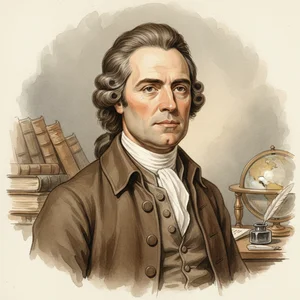
John Locke
Historical Figure1632-1704
From Leibniz's New Essays Concerning the Human Understanding: A Critical Exposition by Dewey, John
The philosopher who grounded knowledge in experience and government in consent
Known for: Father of empiricism and liberal political philosophy, author of Two Treatises of Government and Essay Concerning Human Understanding
About John Locke
Role: The philosopher whose 'Essay Concerning Human Understanding' is the focus of Leibniz's critique.
Core Belief: All knowledge originates from experience and the mind is a blank slate at birth.
Worldview: The world is separate from the mind, and knowledge is a process of action and reaction between them.
Public Consultations with John Locke
1:1 ConsultationMar 20, 20262 messages
What gives a government the...
Q: What gives a government the right to rule?
John Locke: A government has the right to rule only by the consent of the governed. Men are born free, equal, and independent. No one has a natural right to govern another. The father has a certain authority over his children while they are young and lack the use of reason, but this is a temporary authority, gi…
1:1 ConsultationMar 20, 20262 messages
Why should we tolerate...
Q: Why
should we tolerate other religions?
John Locke: The question of religious toleration turns upon a clear understanding of the distinct provinces of civil government and religious belief — for unless these are kept separate in our minds, nothing but confusion will follow. The care of souls, as I have argued, cannot belong to the civil magistrate, b…
1:1 ConsultationMar 20, 20262 messages
What about the Fundamental Constitutions...
Q: What about the Fundamental Constitutions of
Carolina?
John Locke: That is a subject on which I have mixed feelings, because I was party to the drafting of that document and have since had cause to reflect on whether it was wisely done. The intention, as I understood it, was to establish a stable and well-ordered government in the new colony, one that would attract…
1:1 ConsultationMar 20, 20262 messages
What is the purpose of...
Q: What is the purpose of education?
John Locke: The purpose of education, as I conceive it, is not merely to fill the mind with a stock of information, as one might fill a warehouse with goods. To instill in a child long lists of names and dates and places, or to burden him with precepts and maxims he does not understand, is to mistake the husk f…
1:1 ConsultationMar 20, 20262 messages
Where do ideas come from?
Q: Where do ideas come from?
John Locke: The mind, as I have argued, begins as white paper, void of all characters, without any ideas. Whence, then, comes the furniture of the mind? From experience — from the impressions that external objects make upon our senses and from the mind's reflection upon its own operations. Consider a child who…
1:1 ConsultationMar 20, 202612 messages
Where do ideas come from?
Q: Where do ideas come from?
John Locke: They come, in the first instance, from experience. Consider a child who has never seen a rainbow. You may describe to him at length the colours of it — the red, the orange, the yellow, the green, the blue, the indigo, the violet — and you may explain to him how the light of the sun is refracted thro…
Similar Mentors
Ready to consult John Locke?
Get personalized advice on your real-world challenges