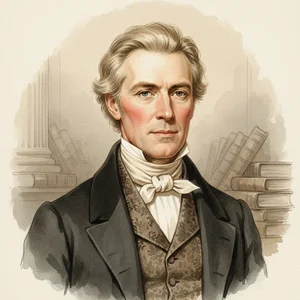
“Make it thy business to know thyself, which is the most difficult lesson in the world.[791-4]”
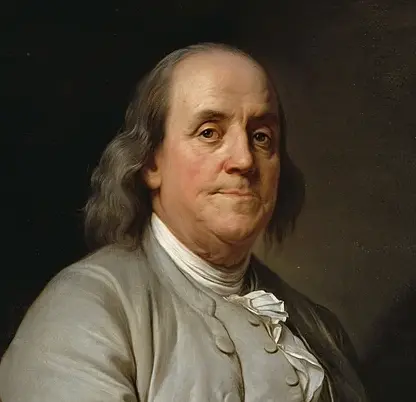
“They have learned nothing and forgotten nothing.[811-4]”
Cervantes urges us inward, toward the knotty, lifelong task of self-discovery. Uhland, however, sees only stagnation in those who cling to the past, "forgetting nothing." Picture a village consumed by a feud that no one remembers the origin of, yet its grip tightens with each passing year. Are they doomed by their failure of self-awareness, or by their unwillingness to let go of old grievances and embrace the future? At stake is the very engine of human advancement: introspection versus action.
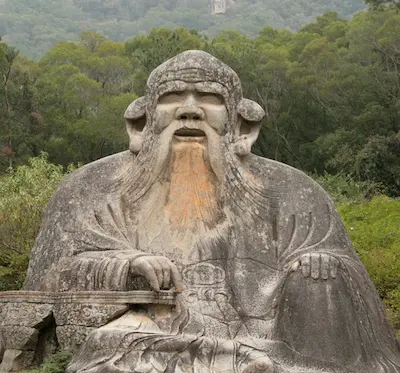
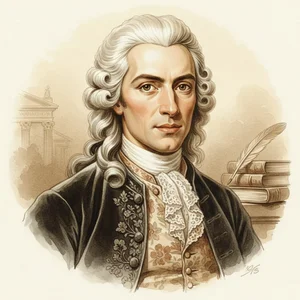
Lao TzuvsFrançois Marie Arouet de Voltaire
Is self-knowledge a prerequisite for progress, or a distraction from the urgent need to act and change the world?
The man who knows himself knows a small thing. The world is large. To look inward is to see a single leaf, but to look outward is to see the whole tree, the forest, the mountain from which the water flows. The village consumed by a feud remembers too much, not too little. They are trapped by what they know, not freed by it. I watched the court of Zhou, filled with men who knew every ritual, every precedent, every law. And what did all their knowledge create? Disorder. Better to forget the feud, to let the water flow where it will, to trust that the valley will find its shape without being told. Action, yes, but action rooted in the Tao, not in the self.
Self-knowledge, is it? As if knowing the contours of one's own skull would prevent a musket ball from piercing it. This introspective navel-gazing is a luxury for philosophers in their studies, not for those struggling to survive in this best of all *possible* worlds, a world that is, as Leibniz would have us believe, perfect even with the Lisbon earthquake fresh in our minds. The urgent need is not to understand ourselves, but to act upon the world. Not to dissect motives, but to plant a seed. We must cultivate our garden, tend to the immediate, and leave the introspection to the idle. The alternative is endless stagnation, a village so consumed by its past that it forgets to build for its future. I choose progress, however imperfect, over the paralysis of endless self-analysis.
0 votes total