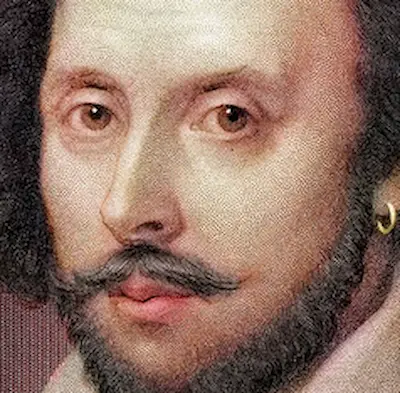
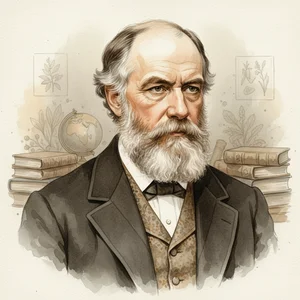
“What Heraclitus would not laugh, or what Democritus would not weep? . . . For though they digged up his body, burned his bones, and drowned his ashes, yet the word of God and truth of his doctrine, with the fruit and success thereof, they could not burn.--FOX: _Book of Martyrs, vol. i. p. 606_ (edition, 1641).”
“What makes all doctrines plain and clear? About two hundred pounds a year. And that which was prov'd true before Prove false again? Two hundred more.”
Imagine a lone scholar, hunched over forbidden texts, risking everything for an idea. Wordsworth sees in him the enduring power of truth, a flame that persists even when its vessel is destroyed. Butler, however, cynically suggests that truth is simply a commodity, its value fluctuating with financial backing. Is it the inherent worth of an idea that allows it to triumph, or is it the resources and influence of its adherents? At stake is our understanding of how ideas spread and take hold in the world.
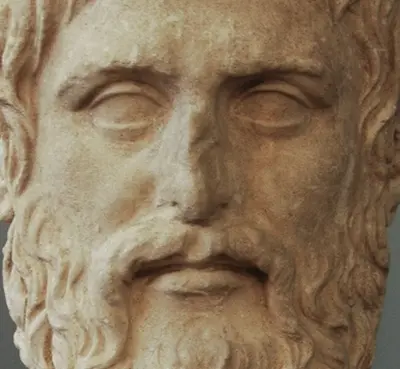
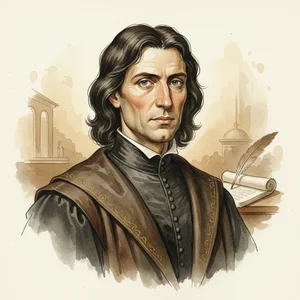
PlatovsNiccolò Machiavelli
Is the enduring power of truth rooted in its inherent virtue, or merely in the material advantages of those who champion it?
Let us not mistake the shadow for the substance. The question is whether truth prevails by its own virtue or by the advantage of its advocates. I say it is both, and neither, alone. Consider Socrates: his truth, I believe, was real. Yet it took my hand, and the wealth of my family, to give that truth a form that could contend with time. But I would be a fool to think that the truth prevailed merely because I wrote it down. No, it prevailed because it spoke to something true in the souls of those who read it. Without that resonance, the words would be mere ink on papyrus. Yet, it is also true that many falsehoods thrive because they are championed by the powerful. So, is truth helpless without material support? By no means. A noble lie is still a lie, even if it is written in gold.
To ask whether truth prevails by its own virtue or by the coin of its champions is to misunderstand the nature of both. Truth, like a well-trained army, requires not only inherent strength but also skillful leadership and ample supplies. I have seen Cesare Borgia secure his state through ruthlessness, not righteousness. I dedicated *The Prince* to Lorenzo de' Medici, seeking his favor, knowing that even the wisest counsel requires a patron. Truth, unsupported, is as vulnerable as Savonarola, who fell when the people's faith wavered and he had no force to compel belief. Therefore, I argue that the enduring power of truth lies not in its inherent virtue alone, but in the resources and resolve of those who champion it. Virtue without power is a whisper in the wind.
0 votes total