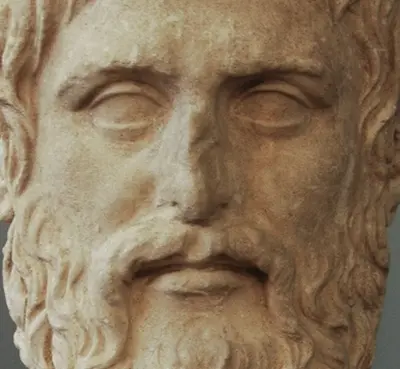
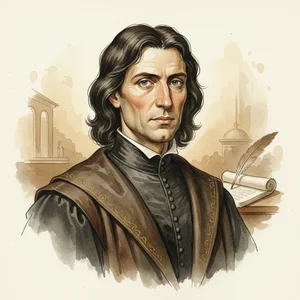
“What Heraclitus would not laugh, or what Democritus would not weep? . . . For though they digged up his body, burned his bones, and drowned his ashes, yet the word of God and truth of his doctrine, with the fruit and success thereof, they could not burn.--FOX: _Book of Martyrs, vol. i. p. 606_ (edition, 1641).”
“What makes all doctrines plain and clear? About two hundred pounds a year. And that which was prov'd true before Prove false again? Two hundred more.”
Wordsworth, echoing Foxe's martyrs, envisions truth as an unyielding force, impervious to physical destruction. Burn the body, drown the ashes, the "word of God and truth" persists. Butler, however, snidely suggests truth is a commodity, its clarity directly proportional to one's income. Imagine a scholar, once lauded for groundbreaking research, suddenly recanting his findings after securing a lucrative position at a corporation. Is he enlightened, or simply bought? At stake is our faith in the very possibility of objective reality.
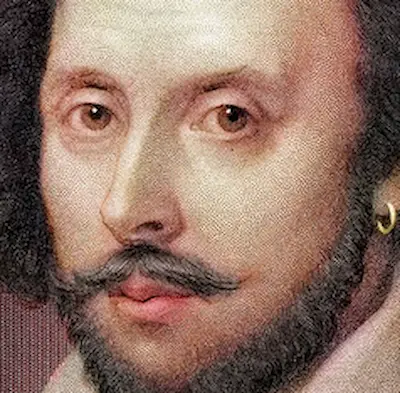
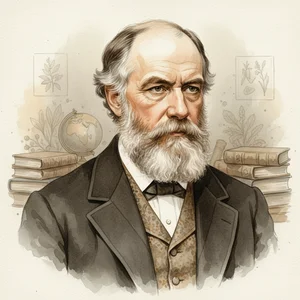
William ShakespearevsCharles Darwin
Is truth a steadfast beacon that endures despite persecution, or a malleable construct shaped by self-interest and circumstance?
A plague on both their houses, say I — the martyr-monger and the man who sells his conscience for a purse! Truth, mistress, is neither a stone nor a strumpet, though men will use her for both. Consider young Claudio in *Much Ado*, ready to believe the worst of Hero on the say-so of a bastard's trickery. He loved her, or thought he did, but his own vanity and fear were stronger than any beacon. Is that truth malleable? No, it's Claudio who's malleable, bending to the shape of his own desires. The truth remains — Hero is innocent — waiting for someone with the courage to see it. Some truths may be burned or bought, but they flicker still, awaiting their hour.
The question of truth's nature strikes me as one best approached through observation, as with any matter of the natural world. I am inclined to think that truth is neither a steadfast beacon nor a mere plaything of self-interest, but something more akin to a species adapting to its environment. Butler's suggestion that truth shifts with fortune cannot be dismissed entirely. I have observed, even among my scientific peers, how readily a theory gains adherents when it promises fame or advancement. Yet, the endurance of certain truths, like the laws of physics, despite persecution or unpopularity, suggests something more fundamental at play. Perhaps, like the struggle for existence, the struggle for truth winnows out the less robust ideas, leaving those best suited to explain the world as we observe it.
0 votes total