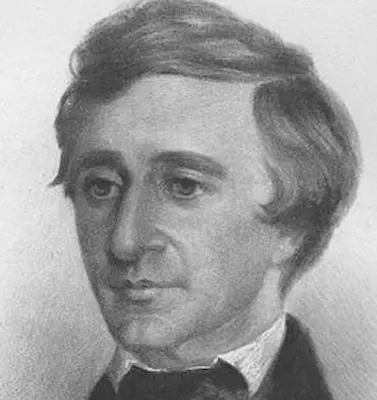
Henry David Thoreau
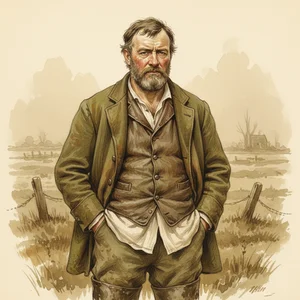
John Field
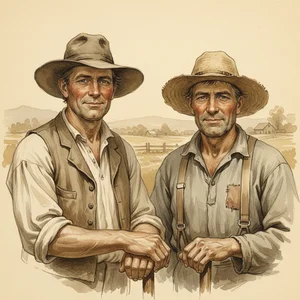
Townsmen Farmers
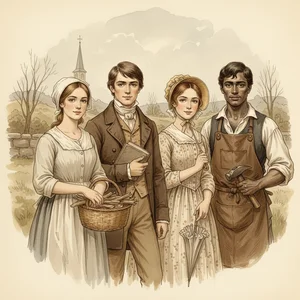
Villagers

Poet Visitor
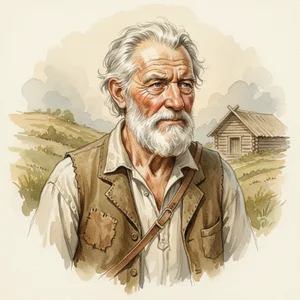
Old Settler
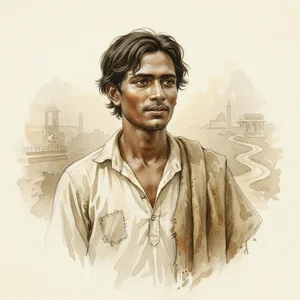
Strolling Indian
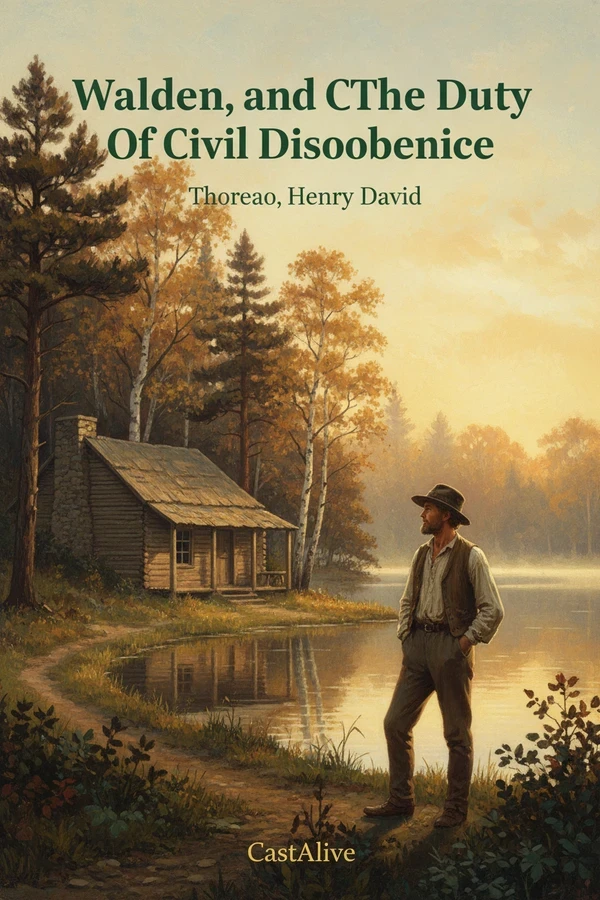
7 characters • Hover to meet them
Walden, and On The Duty Of Civil Disobedience
by Henry David Thoreau
About This Book
Authors, American -- 19th century -- Biography, Civil disobedience, Government, Resistance to
Conversations
Is honor best served by loyalty to a leader and nation, or by uncompromising adherence to one's own moral compass, even if it means dissent?
honor — Henry David Thoreau vs. Alexander Hamilton
Is honor a social contract we willingly enter, or a fleeting recognition granted (or withheld) by a fickle world?
honor — Henry David Thoreau vs. Alexander Hamilton
I work for a company developing carbon capture technology. We believe we can reverse climate change through engineering—massive machines that pull CO2 from the atmosphere. If we scale successfully, we might save civilization. My neighbor is a permaculture farmer. He thinks we're insane. "You can't engineer your way out of a crisis caused by engineering," he says. "The answer isn't more technology—it's less consumption, smaller lives, returning to the land." He's not wrong that our lifestyle is unsustainable. But I've done the math. Eight billion people can't all become permaculture farmers. We can't degrow our way to survival. We need technological solutions. He's done the math too. Carbon capture at scale requires enormous energy, creates its own waste streams, and lets people avoid the harder changes. "It's a fantasy that lets us keep destroying the planet while feeling virtuous." I believe in human ingenuity. He believes in human limits. We both want to save the world but we can't both be right about how. Is the future going to be solved by more innovation or less consumption? — The Green Technologist in Boulder
Progress & Simplicity Debate: Can technology solve the problems technology created?
I quit my lucrative tech job two years ago to live simply. I moved to a cabin in rural Oregon. I grow vegetables, read books, write in my journal. I've never been happier or more at peace. My old friends think I've lost my mind. "You're wasting your talents," they say. "You could be changing the world." They send me articles about effective altruism, about how high earners can do more good by donating than by volunteering. They're not wrong. I had skills. I had influence. I had a platform. Now I have tomatoes and solitude. But I was miserable before. I was contributing to systems I didn't believe in. My "impact" felt hollow because I didn't believe in what I was impacting. Now I live according to my values, but my values only affect me. Is a good life lived quietly a wasted life? Do I owe my talents to the world, or can I choose simplicity over significance? — The Successful Dropout in San Francisco
Life & Society Debate: Is a good life lived quietly a wasted life?
My husband and I make good money but we're constantly stressed about it. We have a nice house with a big mortgage. Two cars with payments. Subscriptions to everything. We eat out three times a week because we're too tired to cook. I've been reading about minimalism and feel called to simplify—sell the house, move to something smaller, cook at home, reduce consumption. My husband thinks I'm being extreme. He says we've "earned" our lifestyle and the answer is just to make more money. But here's the thing: when I imagine a simpler life, I imagine it being boring. I love trying new restaurants. I love hosting dinner parties. I love having nice things. Can you be a minimalist and still enjoy the pleasures of life? — Too Much of Everything in Minneapolis
Lifestyle & Simplicity Debate: Simplicity versus pleasure. Brillat-Savarin's philosophy of enjoyment meets Thoreau's deliberate living.
Discuss Walden, and On The Duty Of Civil Disobedience
AI-powered discussion with characters from Walden, and On The Duty Of Civil Disobedience by Thoreau, Henry David
Want to join the conversation? Sign in to talk with your favorite characters!