Mentor Advice

Real questions answered by history's greatest minds and literature's most compelling characters.

Filtered by:Leonardo da VinciClear all

2 questions answered

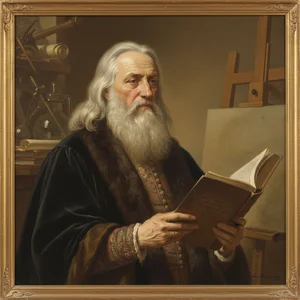
Portrait of Leonardo da Vinci
Leonardo da Vinci

From The Renaissance: Studies in Art and Poetry

Creativity is not a gift possessed by some and denied to others. It is a way of engaging with the world that can be developed through practice. First: Look. Truly look. Most people glance at things and move on, satisfied with their first impression. I spent hours watching water flow, studying how it curls and breaks. I observed how light falls on a face at different times of day. I dissected corpses to understand how muscles attach to bones. This seeing — patient, detailed, questioning — is the foundation of all creative work. Second: Make connections across domains. I did not keep my painting separate from my engineering, my anatomy separate from my hydraulics. Everything informs everything else. The person who knows only one field sees with one eye. The person who connects many fields sees in depth. Keep notebooks. Write down observations, sketch ideas, record questions. Do not worry about organization — let thoughts accumulate. Review your notes periodically. Patterns will emerge that you did not expect. Ask questions constantly. Why does this work this way? What would happen if I changed this element? How does this process in nature relate to this problem in mechanics? Questions are more valuable than answers because they open new territories. Do not fear mistakes. I have abandoned more projects than I have completed. Each "failure" taught me something. The person who fears imperfection creates nothing. The person who embraces experimentation creates wonders. And give yourself time to do nothing productive. My best ideas came not when I was working, but when I was wandering, letting my mind make connections without direction. Creativity is not lightning from the sky. It is the fruit of disciplined curiosity practiced over years.

Read full response →
Portrait of Leonardo da Vinci
Leonardo da Vinci

From The Renaissance: Studies in Art and Poetry

The danger is not that curiosity dies with age, but that we let it be buried under the weight of what we think we already know. Children ask questions about everything because they know they know nothing. Adults stop asking because they believe they have learned enough. This is a kind of death that precedes the physical one. My method: I kept lists of questions I wanted to answer. Why is the sky blue? How do birds fly? What causes the moon to shine? Some questions I answered through study and experiment. Others remained open my whole life. The list never grew shorter — each answer spawned new questions. Seek out people who know more than you in some domain, and be willing to learn from anyone. I learned from artists, engineers, anatomists, musicians, mathematicians — and from peasants who knew how rivers behaved better than any scholar. Take up new disciplines, especially ones that seem unrelated to your primary work. When I was well established as a painter, I threw myself into anatomy, then architecture, then military engineering. Each new field refreshed my seeing in the others. Be willing to look foolish. The person too proud to ask basic questions will never learn anything new. I asked "stupid" questions constantly — and found that the questions were not stupid at all. Travel if you can, not as a tourist but as a student. See how other people solve problems, build buildings, organize their lives. Familiarity breeds not contempt but blindness. And remember: You will die having learned only the smallest fraction of what there is to know. This is not tragedy — it is invitation. The universe offers infinite fascination. All you must do is accept.

Read full response →