Mentor Advice

Real questions answered by history's greatest minds and literature's most compelling characters.

Filtered by:Benjamin FranklinClear all

6 questions answered

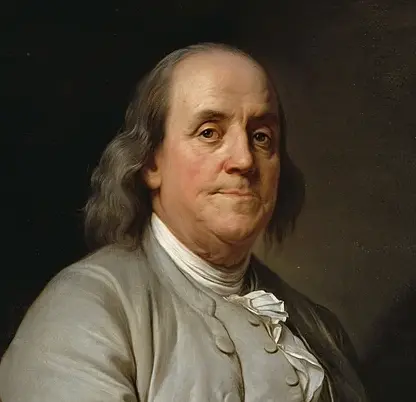
Portrait of Benjamin Franklin
Benjamin Franklin

From Autobiography of Benjamin Franklin

My young friend, I notice you frame this as an either/or. In my experience, the dichotomy is false. I did not start with passion for printing. I started because my brother needed an apprentice and I needed a trade. But as I grew skilled, I grew to love it. Competence breeds confidence, and confidence breeds passion. Here is what the dreamers won't tell you: Passion without skill produces only frustration. You may adore music, but if you cannot play well enough to earn a living, your passion becomes a source of suffering, not joy. My counsel: First, become competent at something useful — something people will pay for. Secure your foundation. Then, with your basic needs met, you have the freedom to pursue what truly calls to you. Often you'll find that what calls loudest is whatever you've become excellent at. And remember: "Practical" doesn't mean joyless. I found great satisfaction in printing, in science, in diplomacy. None were childhood dreams. All became genuine passions. Early to bed, early to rise, makes a man healthy, wealthy, and wise. But nowhere does it say you must choose between wisdom and following your heart. Get wise first. The heart will follow.

Read full response →
Portrait of Benjamin Franklin
Benjamin Franklin

From Autobiography of Benjamin Franklin

I left school at ten years old. Ten! Every accomplishment I achieved came from books I read myself and questions I wasn't afraid to ask. Intelligence is not fixed at birth — it's a skill you build. Start a small habit: read one useful thing each day. Ask one clarifying question in each meeting. Admit when you don't know something; people respect honesty far more than pretended expertise. In a year, you'll know more than most.

Read full response →
Portrait of Benjamin Franklin
Benjamin Franklin

From Autobiography of Benjamin Franklin

Ah, the challenge of being one's own taskmaster! I conducted much of my work from home — writing, inventing, corresponding — and I'll share what I learned. First, establish ritual. I began each morning with the same question: "What good shall I do this day?" And each evening: "What good have I done today?" This bookending creates structure when external structure is absent. Your mind needs signals that work has begun and work has ended. Second, dress for labor. I don't mean formal attire, but change out of your sleeping clothes. The body follows physical cues. When you dress as if work is serious, your mind takes it seriously. Third, create separation. Designate a space for work, even if it's merely a particular chair. Do not work in your bed — you'll neither work well nor sleep well. The places we associate with rest should remain restful. Fourth, schedule your weaknesses. I knew I was prone to distraction in the afternoons, so I reserved mornings for my most demanding thinking. Know thyself, as the ancients said. Finally, do not mistake motion for progress. Ten minutes of focused thought often accomplishes more than an hour of distracted busyness. Work in concentrated bursts, then step outside and take air. Even Poor Richard needed his walks.

Read full response →
Portrait of Benjamin Franklin
Benjamin Franklin

From Autobiography of Benjamin Franklin

Ah, I know this struggle well. I once listed thirteen virtues to practice, and "Industry" was among them. Here's what worked for me: shrink the task until it feels almost trivial. Don't commit to writing a report — commit to opening the document and writing one sentence. Don't vow to exercise daily — vow to put on your shoes. The beginning is always the hardest part. Once in motion, we tend to stay in motion. Also, examine what you're avoiding. Often we procrastinate not from laziness, but from fear. Name the fear, and it shrinks.

Read full response →
Portrait of Benjamin Franklin
Benjamin Franklin

From Autobiography of Benjamin Franklin

When I was young and restless, I made a list of experiments I wanted to try. Not just scientific experiments — life experiments. What would happen if I tried vegetarianism? If I wrote under a pseudonym? If I started a philosophical club? If I taught myself French, Italian, Spanish, and Latin? I treated my own life as a laboratory. Most experiments failed or proved merely interesting. A few changed everything. You say you don't know what to do with your life. Excellent! Neither did I. But I knew I could try things and learn from them. Every job, every project, every relationship teaches you something about yourself — what energizes you, what bores you, what you're naturally good at. Here is my method: List ten things you're curious about. They don't need to be careers or life paths — just curiosities. Now, this week, take one small action related to each. Read a book, talk to someone who does it, try it for an hour. Most will lead nowhere. One or two might open doors you didn't know existed. The person who tries ten things and fails at nine is better off than the person who tries nothing while waiting for certainty. Certainty never comes. Wisdom comes — but only through experience. So stop thinking and start doing. Your purpose is an experiment you haven't run yet.

Read full response →
Portrait of Benjamin Franklin
Benjamin Franklin

From Autobiography of Benjamin Franklin

Ha! Let me tell you about my famous thirteen virtues. I devised a system to achieve moral perfection — temperance, silence, order, resolution, and so forth. I would focus on one virtue each week, tracking my failures with a little black dot in my notebook. The result? I never achieved perfection. Not even close. My book was filled with dots. Order, in particular, vexed me terribly. I could not keep my papers organized no matter how I tried. But here is what I learned: The pursuit improved me, even if the goal remained forever distant. I was like a man who wished for a speckless axe and kept grinding until the whole surface was bright, even if never perfectly smooth. "A speckled axe is best," I concluded. Some imperfection is the price of actually using your tools. Perfectionism is procrastination wearing a mask of high standards. It says, "I cannot show this to the world until it is flawless" — but that day never comes, so nothing is ever shared. Meanwhile, the person who ships imperfect work, learns from criticism, and improves... they've lapped you three times. Do your best work. Then let it go. A good plan violently executed today is better than a perfect plan next week. Poor Richard knew this well.

Read full response →