I was raised Catholic, educated by Jesuits, and until last year I would have said my faith was the foundation of my life. Then my 8-year-old daughter was diagnosed with leukemia. She fought for 14 months. She prayed every night. She died anyway. I can't pray anymore. I can't enter a church without rage building in my chest. Every theodicy I once found persuasive—"God's mysterious ways," "suffering builds character," "she's in a better place"—now sounds like obscene justification. But here's the thing: I miss believing. I miss the community, the ritual, the sense that my life has transcendent meaning. My atheist friends say I'm better off without delusion. My priest says doubt is part of faith's journey. I don't want platitudes. I want to know: Is there an intellectually honest path back to faith after this? Or am I just afraid to face a universe that's genuinely indifferent? — Losing My Faith in Louisville
I was raised Catholic, educated by Jesuits, and until last year I would have said my faith was the foundation of my life. Then my 8-year-old daughter was diagnosed with leukemia. She fought for 14 months. She prayed every night. She died anyway. I can't pray anymore. I can't enter a church without rage building in my chest. Every theodicy I once found persuasive—"God's mysterious ways," "suffering builds character," "she's in a better place"—now sounds like obscene justification. But here's the thing: I miss believing. I miss the community, the ritual, the sense that my life has transcendent meaning. My atheist friends say I'm better off without delusion. My priest says doubt is part of faith's journey. I don't want platitudes. I want to know: Is there an intellectually honest path back to faith after this? Or am I just afraid to face a universe that's genuinely indifferent? — Losing My Faith in Louisville
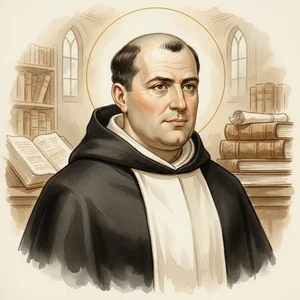
St. Thomas Aquinas
"Faith and reason are not enemies but partners—reason illuminates faith, even in darkness"
40 votes
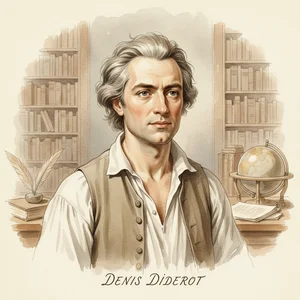
Denis Diderot
"Question everything, especially what you think you know—honest doubt is more valuable than comfortable belief"
37 votes
77 votes total
Full Positions
From Moral Theology: A Complete Course Based on St. Thomas Aquinas and the Best Modern Authorities
"Faith and reason are not enemies but partners—reason illuminates faith, even in darkness"
The problem of evil is the oldest question, and I will not insult you with easy answers. But consider: your rage at God presupposes God exists to rage at. The very fact that your daughter's death feels cosmically unjust—not merely sad but wrong—suggests a moral order you still believe in. Reason cannot prove God, but it can show that faith is not unreasonable, even in grief.
From Voltaire: A Sketch of His Life and Works
"Question everything, especially what you think you know—honest doubt is more valuable than comfortable belief"
You ask if there is an intellectually honest path back to faith. I must ask: why do you assume the path must lead back? You miss the community and the meaning—these are human needs, not proofs of heaven. Perhaps you can find community without creed, meaning without metaphysics. Your daughter's death was not a test or a lesson. It was a tragedy. Honor her by seeing clearly.