I'm a filmmaker who's spent ten years making small, intimate character studies that get into festivals and win some awards but never break through. My films are quiet—about ordinary people, slow pacing, ambiguous endings. Critics call them "exquisite" and "restrained." Almost nobody sees them. Now a streaming platform is offering me $5 million to direct an action thriller. It's not my style. The script is bombastic, the emotions are broad, the ending is spelled out in neon. But it would reach 50 million viewers. And the producer says if it works, I can make whatever I want next. My mentor says I should stay true to my voice—that compromising will corrupt my artistic vision permanently. My agent says I'm being precious—that real artists adapt and evolve. I think about directors who "sold out" and never came back. But I also think about dying unknown while my hard drives full of unseen masterpieces gather dust. Is art that reaches millions but compromises vision still art? Or is purity of expression more important than audience? — Go Big or Stay True in Seattle
I'm a filmmaker who's spent ten years making small, intimate character studies that get into festivals and win some awards but never break through. My films are quiet—about ordinary people, slow pacing, ambiguous endings. Critics call them "exquisite" and "restrained." Almost nobody sees them. Now a streaming platform is offering me $5 million to direct an action thriller. It's not my style. The script is bombastic, the emotions are broad, the ending is spelled out in neon. But it would reach 50 million viewers. And the producer says if it works, I can make whatever I want next. My mentor says I should stay true to my voice—that compromising will corrupt my artistic vision permanently. My agent says I'm being precious—that real artists adapt and evolve. I think about directors who "sold out" and never came back. But I also think about dying unknown while my hard drives full of unseen masterpieces gather dust. Is art that reaches millions but compromises vision still art? Or is purity of expression more important than audience? — Go Big or Stay True in Seattle

Richard Wagner
"Art must be revolutionary—the artist who merely entertains has failed; true art transforms souls"
43 votes
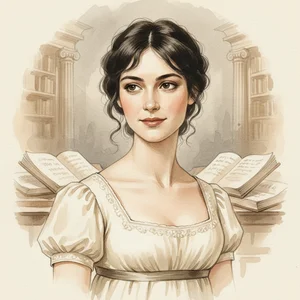
Jane Austen
"Work within constraints to achieve perfection—the power is in what you do not say"
40 votes
83 votes total
Full Positions
From My Life — Volume 1
"Art must be revolutionary—the artist who merely entertains has failed; true art transforms souls"
I built my own opera house rather than compromise with the mediocrities who ran the others. They called me arrogant, impossible, bankrupt—and they were sometimes right. But the Ring Cycle exists because I refused to make it fit existing stages. Your small films may be your Ring Cycle. The streaming millions will forget their thriller in a week. What will survive?
From The Letters of Jane Austen: Selected from the compilation of her great nephew, Edward, Lord Bradbourne
"Work within constraints to achieve perfection—the power is in what you do not say"
I wrote about three or four families in a country village, and some have found it sufficient. Grand gestures are often just noise. But I must ask: is your reluctance truly artistic principle, or is it fear of being judged in a larger arena? Perhaps the thriller need not corrupt you. Perhaps you can find your voice even in bombast—a raised eyebrow amid the explosions. Austen wrote within the narrowest constraints and found infinity there.