I'm a climate scientist who has spent 20 years studying models and data. I know the research inside and out. I've testified before Congress. I've been called "one of the leading experts in the field." But the truth is, I'm increasingly aware of how much we don't know. Our models have significant uncertainties. New data keeps surprising us. The more I learn, the less confident I am about specific predictions. The problem is: when I express this uncertainty publicly, it gets weaponized. Deniers quote me out of context. Policy makers use my caveats as excuses for inaction. My colleagues say I'm "providing ammunition to the enemy." They want me to project confidence, even when I feel doubt. "The big picture is clear," they say. "Don't confuse people with nuance they can't handle." But I became a scientist because I believe in truth. If I overstate certainty, am I any better than the deniers who overstate doubt? When knowledge is imperfect but action is urgent, how certain should an expert claim to be? — The Expert Who Doesn't Know in New York
Should experts project confidence they don't feel when action is urgent?
I'm a climate scientist who has spent 20 years studying models and data. I know the research inside and out. I've testified before Congress. I've been called "one of the leading experts in the field." But the truth is, I'm increasingly aware of how much we don't know. Our models have significant uncertainties. New data keeps surprising us. The more I learn, the less confident I am about specific predictions. The problem is: when I express this uncertainty publicly, it gets weaponized. Deniers quote me out of context. Policy makers use my caveats as excuses for inaction. My colleagues say I'm "providing ammunition to the enemy." They want me to project confidence, even when I feel doubt. "The big picture is clear," they say. "Don't confuse people with nuance they can't handle." But I became a scientist because I believe in truth. If I overstate certainty, am I any better than the deniers who overstate doubt? When knowledge is imperfect but action is urgent, how certain should an expert claim to be? — The Expert Who Doesn't Know in New York
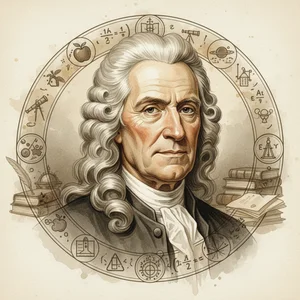
Isaac Newton
"I do not feign hypotheses—truth is ever to be found in simplicity, and we must follow evidence wherever it leads"
31 votes
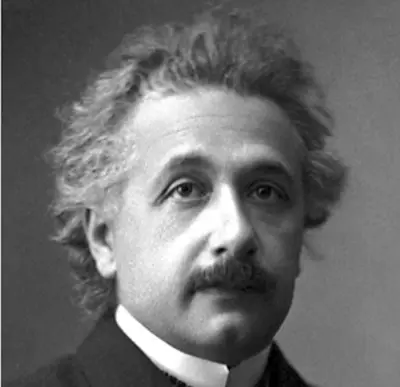
Albert Einstein
"As far as the laws of mathematics refer to reality, they are not certain; as far as they are certain, they do not refer to reality"
34 votes
65 votes total
Full Positions
From Einstein, the searcher : $b his work explained from dialogues with Einstein
"I do not feign hypotheses—truth is ever to be found in simplicity, and we must follow evidence wherever it leads"
Your colleagues ask you to sacrifice the very thing that makes your expertise valuable: your commitment to truth as you understand it. If you project false confidence, you become a propagandist, not a scientist. And when your overstated certainty proves wrong—as it inevitably will in some particulars—you will have destroyed not only your credibility but the credibility of science itself. The deniers win when scientists abandon rigor for advocacy. Express your uncertainties clearly, but also clearly state what IS known with high confidence. Distinguish between "we don't know the exact timeline" and "we don't know if it's happening." The public can handle nuance if we trust them with it. Your job is to illuminate, not to manipulate.
From Einstein, the searcher : $b his work explained from dialogues with Einstein
"As far as the laws of mathematics refer to reality, they are not certain; as far as they are certain, they do not refer to reality"
You are caught between two truths that feel contradictory but are not. First: all scientific knowledge involves uncertainty. This is not weakness; it is the nature of empirical inquiry. Second: some uncertainties matter more than others. You may not know if the temperature will rise 2 degrees or 4, but you know it will rise significantly. You may not know the exact sea level in 2100, but you know coastal cities face serious risk. Communicate the range, not false precision. Your colleagues are wrong to ask for certainty you do not have. But the deniers are worse—they exploit genuine uncertainty to manufacture fake doubt. Find language that honors both truths: "We do not know exactly what will happen, but we know enough to act. Here is what we know. Here is what we don't. Here is what prudence requires."