I'm a senior official in the executive branch. My boss—a Cabinet secretary—wants to implement a major policy change through executive action. Our lawyers say it's legally defensible but will certainly be challenged in court. The courts might uphold it, or might strike it down. The alternative is to work with Congress, but that would take years and might fail entirely. People are suffering now from the problem this policy would address. Some of my colleagues say we should act boldly. "The executive exists to execute. Let the courts check us if they think we've overstepped. That's how the system is supposed to work—action and response, not paralysis by anticipated objection." Others say we should respect the limits of our authority even when we disagree with them. "If we stretch executive power when we're in charge, we legitimate the same stretching when our opponents are in charge. The precedent matters more than the policy." I believe in this policy. I also believe in institutional limits. How do I weigh doing good now against the long-term health of the system? — The Executive Overreach Question in DC
Should executives act boldly and let courts check them, or defer to institutional limits?
I'm a senior official in the executive branch. My boss—a Cabinet secretary—wants to implement a major policy change through executive action. Our lawyers say it's legally defensible but will certainly be challenged in court. The courts might uphold it, or might strike it down. The alternative is to work with Congress, but that would take years and might fail entirely. People are suffering now from the problem this policy would address. Some of my colleagues say we should act boldly. "The executive exists to execute. Let the courts check us if they think we've overstepped. That's how the system is supposed to work—action and response, not paralysis by anticipated objection." Others say we should respect the limits of our authority even when we disagree with them. "If we stretch executive power when we're in charge, we legitimate the same stretching when our opponents are in charge. The precedent matters more than the policy." I believe in this policy. I also believe in institutional limits. How do I weigh doing good now against the long-term health of the system? — The Executive Overreach Question in DC

John Marshall
"It is emphatically the province of the judiciary to say what the law is—but all branches must respect constitutional limits"
27 votes
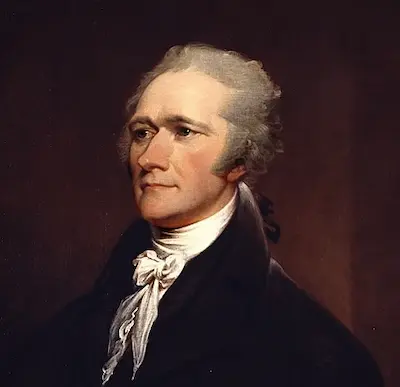
Alexander Hamilton
"Energy in the executive is essential to good government—action with vigor, let the system respond"
31 votes
58 votes total
Full Positions
From The Life of John Marshall, Volume 3: Conflict and construction, 1800-1815
"It is emphatically the province of the judiciary to say what the law is—but all branches must respect constitutional limits"
The system of checks and balances depends on each branch respecting its proper sphere—not testing it to the breaking point. Your colleagues who say "let the courts check us" misunderstand the constitutional design. The courts can declare acts unconstitutional, yes, but that remedy is imperfect. Litigation takes years; in the meantime, the unconstitutional action has effects that cannot be undone. More importantly, the norm of self-restraint is what holds the system together. If the executive acts whenever it believes it can survive judicial review, and the courts become the only check on power, you have converted the judiciary into a political institution and stripped it of its legitimacy. The long-term health of the republic requires that you ask not "can we get away with this" but "is this within our proper authority?" If you are uncertain, the answer is probably no.
From The Federalist Papers
"Energy in the executive is essential to good government—action with vigor, let the system respond"
The Constitution created a strong executive precisely so that government could act with decision and dispatch when circumstances demand. Your more cautious colleagues would have the executive paralyzed by fear of overstepping—but a government that cannot act when people are suffering is no government at all. The system of checks and balances does not require pre-emptive self-limitation; it requires each branch to act according to its own judgment and accept the responses of the others. If the courts strike you down, you will accept their judgment. But until then, you have a duty to execute the laws as you understand them and to address the problems before you. Congressional gridlock is not a reason to do nothing—it is the very situation the executive was designed to navigate. Act. The Constitution will survive vigorous executives far better than it will survive timid ones.