“Ask, and it shall be given you; seek, and ye shall find; knock, and it shall be opened unto you.”
“Destroy his fib or sophistry--in vain! The creature 's at his dirty work again.”
Uhland's biblical echo promises reward for effort; Pope's couplet suggests we're fools to believe it. One side sees a universe responsive to our striving, the other a stage for endlessly inventive rationalizations. Think of the novelist, chasing the perfect sentence, only to find its brilliance fades with each revision. Is the pursuit itself ennobling, or does it simply refine our capacity for disappointment? What's truly at stake here is the nature of progress itself.
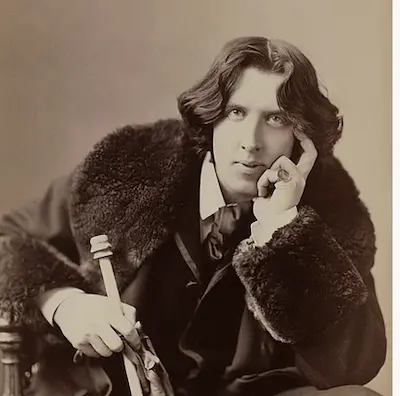

Oscar WildevsAdam Smith
Does persistent human desire lead to fulfillment, or merely to more elaborate forms of self-deception?
Ah, Nora, to frame the human heart as a persistent beggar, knocking upon the unyielding doors of fate, is a delicious cruelty. I say it leads to more elaborate forms of self-deception. After all, is not self-deception merely style elevated to a philosophy? Consider my unfortunate Dorian, forever chasing the phantom of eternal youth, only to discover that beauty without a moral compass is a gilded cage. The pursuit of fulfillment, divorced from truth, becomes a hall of mirrors, reflecting only the vanity of our desires. We refine not our souls, but our excuses. Like Bosie, demanding more than I can give, and somehow convincing me it is my moral duty to impoverish myself. The striving is ennobling only in retrospect, a narrative we craft to soothe our bruised egos.
Whether persistent desire leads to fulfillment or self-deception depends, I suspect, on whether one mistakes the trinkets of success for the true coin of happiness. The poor man's son, as I wrote in my *Theory of Moral Sentiments*, imagines that a palace will bring him ease, when in truth it brings only more elaborate forms of trouble. Desire, in itself, is neither ennobling nor debasing. It is the engine that drives the division of labor, the striving for improvement, the very progress of nations. But desire untethered from the moral sentiments, from that impartial spectator within, becomes a mere grasping, a striving for hollow recognition. Hume, in his dying days, desired only tranquility, and found it not in elaborate schemes but in simple friendship. Persistent desire, then, must be tempered by persistent reflection.
0 votes total